

27. November '25
cb1073cc-acbf-4873-95d9-20882e10d512
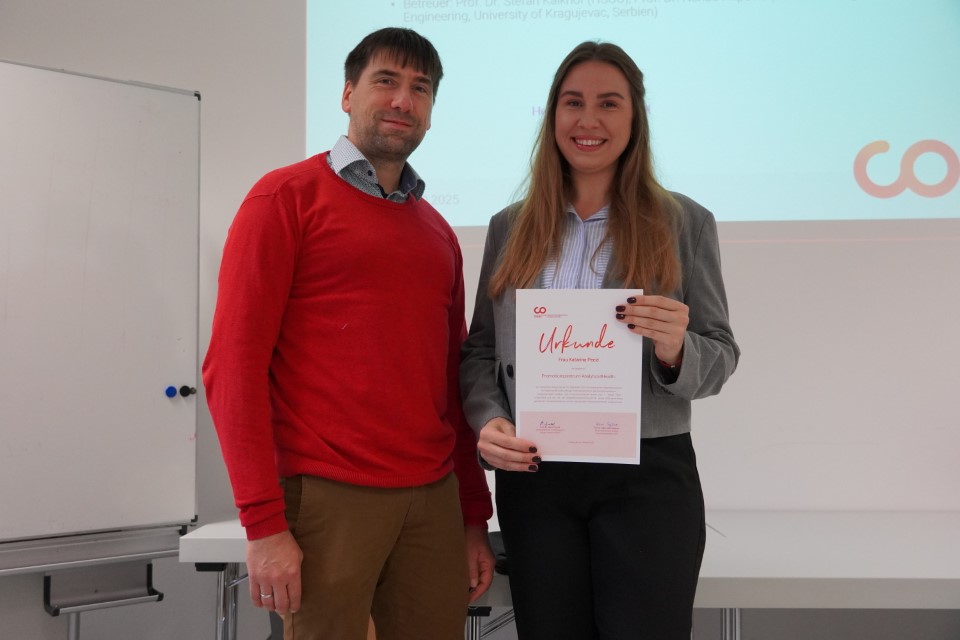
Prof. Dr. Stefan Kalkhof and Katarina Pecić. Foto: Andreas T. Wolf / Hochschule Coburg
112ff818-2476-4cb9-951b-650ebf84c6f5
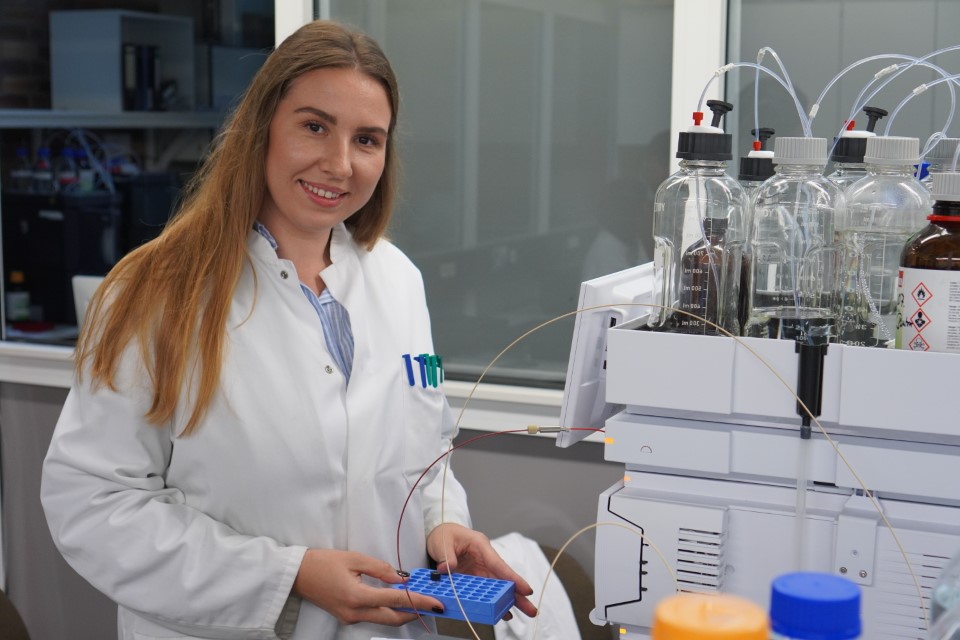
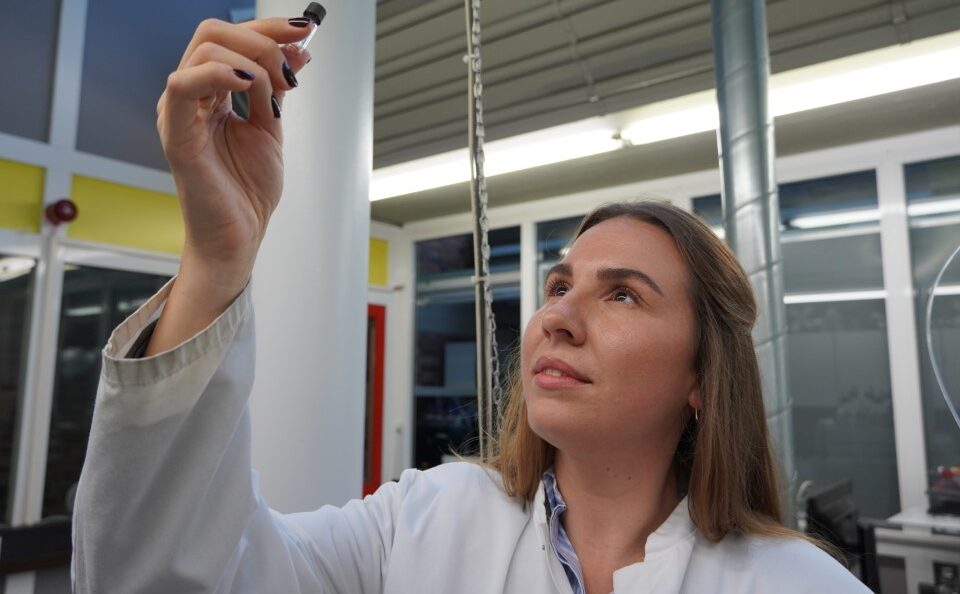
Katarina Pecić. Foto: Andreas T. Wolf / Hochschule Coburg
c16af013-6eac-4bda-9975-2722c0bd3eba
Katarina Pecić. Foto: Andreas T. Wolf / Hochschule Coburg
(Andreas T. Wolf)
Triple-negative breast cancer (TNBC) is among the most aggressive and difficult to treat types of breast cancer. It accounts for 10 to 20 percent of all cases worldwide and is estimated to cause up to 150,000 deaths each year.
To help change this, Katarina Pecić, a doctoral student at the Institute for Information Technologies, University of Kragujevac, Serbia, has joined the Doctoral Center Analytics4Health at Coburg University of Applied Sciences. In collaboration with the Fraunhofer Institute for Cell Therapy and Immunology in Leipzig, she is researching new approaches to make cancer therapies more effective and less toxic.
Palladium instead of Platinum
“I became fascinated by this topic during my research after completing my master’s degree,” Pecić recalls. “When I began working with newly synthesized compounds, particularly palladium-coumarin complexes, I noticed their strong effects on different cancer cell lines.”
Traditional chemotherapy often relies on platinum-based drugs that damage the DNA of cancer cells to stop them from replicating. But these treatments can cause severe side effects.
At her home University in Kragujevac, the new palladium complexes had already shown promising results against several cancer types. So Pecić decided to take on one of the toughest challenges: triple-negative breast cancer – a disease she knew personally.
“My grandmother was diagnosed with breast cancer,” she says. “Watching her go through treatment made me realize how urgently we need better therapies. It motivated me to dedicate my work to finding more effective and less toxic treatments.”
Breaking cancer on a molecular level
In Germany alone, TNBC is estimated to cause up to around 3,700 deaths each year. Because of its poor prognosis and limited treatment options, it remains one of the greatest challenges in cancer research.
Pecić focuses on bioanalytical studies to understand how new palladium compounds affect cancer cells. “I test these compounds to see how they influence cell survival and death,” she explains. “Using advanced cell-based assays and proteomic analyses, I can examine thousands of proteins and uncover their molecular mechanisms.”
Her goal is to identify key molecular targets that the compounds interact with and evaluate their potential as more selective and effective cancer drugs. She is also working on improving drug delivery methods and testing the compounds in 3D tumor models that mimic real tumor conditions.
From Serbia to Germany
Katarina Pecić is pursuing her doctorate jointly between the University of Kragujevac in Serbia, and Coburg University of Applied Sciences.
“It wasn’t an easy decision,” she admits. “For family reasons – and because applying for research positions from a non-EU country can be quite complicated – I hesitated at first. But after spending a year working at the Fraunhofer Institute and Coburg University, I gained valuable international experience and the confidence to continue my research abroad. That time showed me how much progress can come from collaboration across borders.”
International research experience at Coburg University
The collaboration between Prof. Dr. Stefan Kalkhof’s team at Coburg University of Applied Sciences and Prof. Zoran Marković’s group at the Institute for Information Technologies in Kragujevac has been ongoing for three years. During this time, the researchers have worked closely on developing new organometallic compounds for treating aggressive tumors, aiming to find alternatives to traditional platinum-based chemotherapeutics. As part of this collaboration, a doctoral scholarship was secured for Katarina Pecić, which has since been extended to support her continued research.
Now in her third year of doctoral studies, Pecić values the professional and supportive research environment she has found in Germany. With the guidance of Prof. Dr. Stefan Kalkhof from Coburg University, she joined the Analytics4Health Doctoral Center – an interdisciplinary initiative that perfectly matches her research interests.
“Coburg University has a very open and international atmosphere,” she says. “I really appreciate the support from professors and colleagues alike. Coburg itself is a peaceful and charming place – ideal for focusing on research and personal growth.”
After completing her PhD, Pecić hopes to continue her career in cancer biology and bioanalytics. “I’m particularly interested in combining academic research with applied projects that have medical or pharmaceutical relevance. My goal is to stay in science and contribute to improving human health through research.”
Her work is currently supported by a BAYHOST scholarship, funded by the Free State of Bavaria.