

27. January '26
IMG_4073
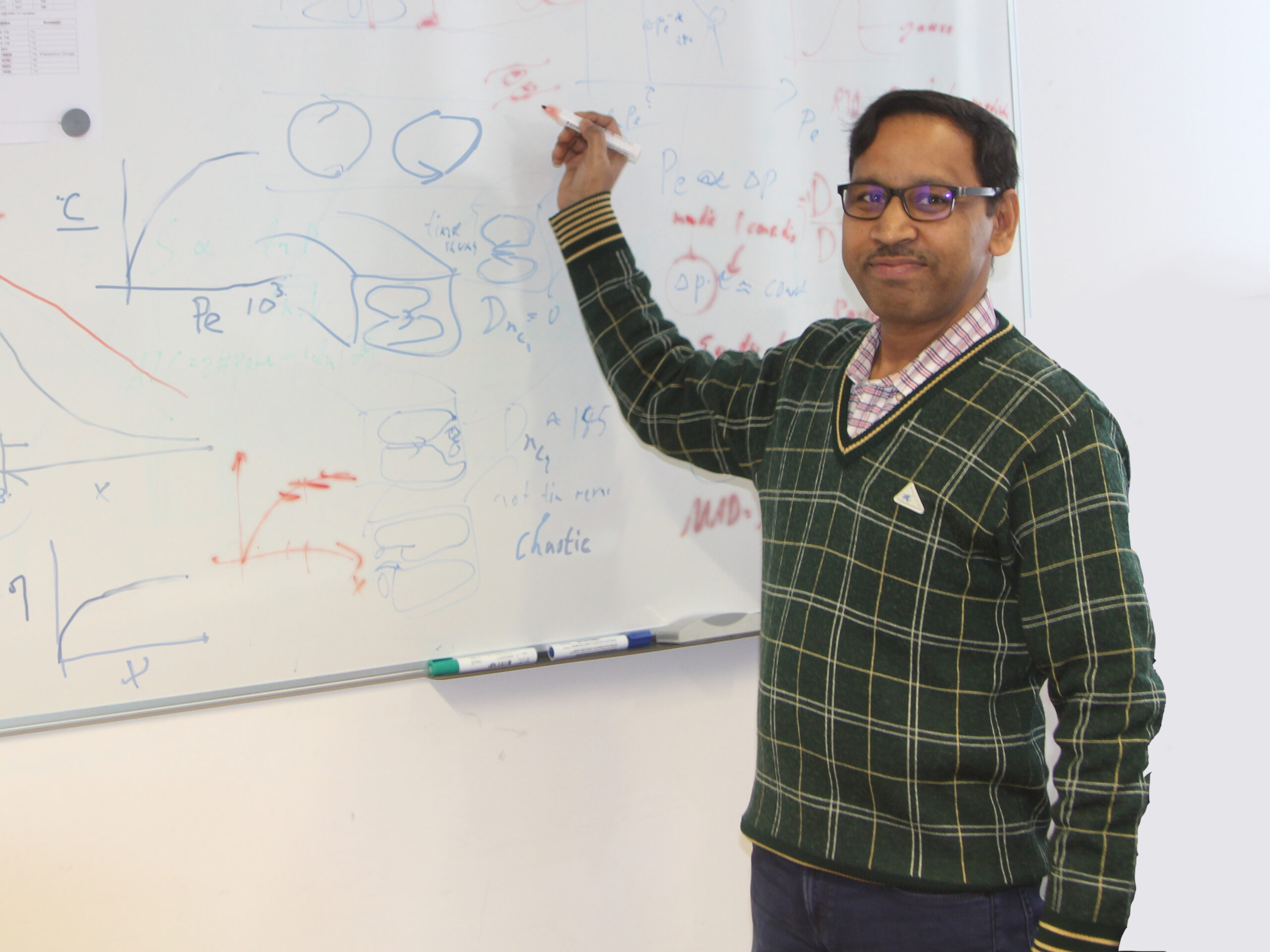
Prof. Dr. Gopal Chandra Shit forscht erneut am ISAT der Hochschule Coburg. Foto: Hochschule Coburg
research1

research2
(Annrerose Hüttl)
Prof. Dr. Gopal Chandra Shit has returned to ISAT, Institute for Sensor and Actuator Technology, for a second research visit. He teaches at Jadavpur University in Kolkata (former German name Calcutta), located in West Bengal. Together with Prof. Dr. Klaus Stefan Drese, head of ISAT, they are advancing their joint research activities in the significant field of microfluidics. We took the opportunity to interview him about his research at ISAT, as well as relevant topics concerning Jadavpur University, the situation of Indian students there, and opportunities for future collaboration.
What is microfluidics and what is your research about?
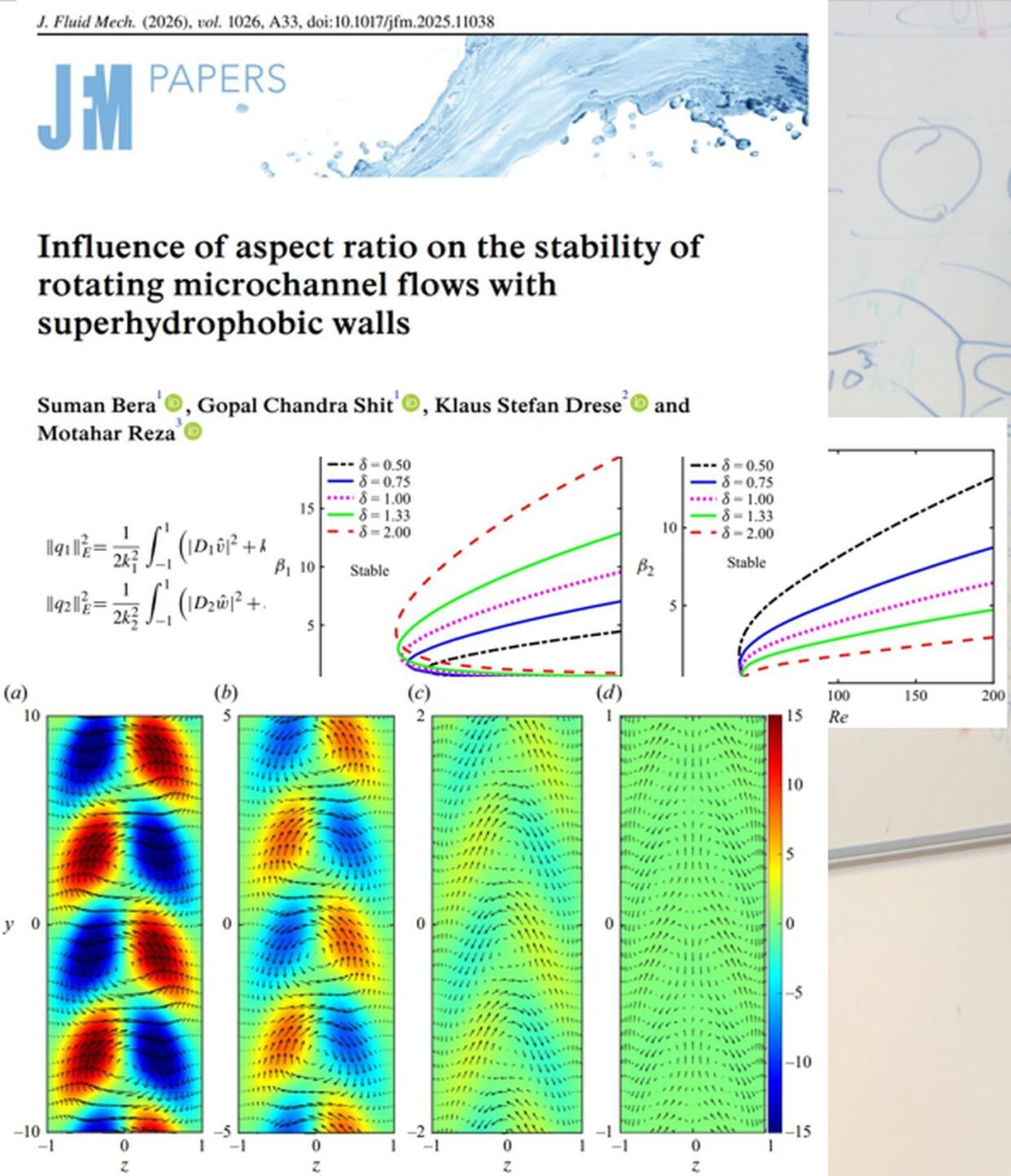
Prof. Dr. Chandra Shit: Microfluidics is reshaping medicine and diagnostics, powering breakthroughs from pocket-sized “lab on a chip” tests to stealthy, minimally invasive drug delivery and low-cost DNA analysis. The challenge is the perfect mixing of the active ingredient. I conduct theoretical investigations and numerically simulate the mechanics behind this. Prof. Dr. Klaus Drese, as my collaborating partner, is doing experimental work, and his ideas and expertise drive the verification of my theoretical modelling. We have already published several scientific papers together, with a new one coming out.
What was your career path at Jadavpur University?
I joined Jadavpur University in 2008 and have since advanced to the position of senior professor. I teach students at both the undergraduate and postgraduate levels and guide several research projects. Over the years, I have published more than 120 scientific papers in leading international journals, including the Journal of Fluid Mechanics and Physics of Fluids.
How long will you be staying in Coburg, and where are you living during your visit?
I’ll be in Coburg until January 28th to work on our joint project. During my stay, I’m living right in the heart of the city, close to Ehrenburg Castle — a location that makes everything wonderfully accessible. I’m very grateful to Veronika Wagner and Janina May from the International Office for arranging such a convenient place to stay.
How did you first discover ISAT and Coburg University?
I initially came across ISAT while searching online for institutions working on microfluidic flow — that’s how it happened. Our collaboration has continued ever since. My first visit to Coburg was in 2024, supported by funding from both the Government of India and the International Office of Coburg University. This joint support made it possible to begin our research exchange and strengthen our partnership.
What can you tell us about Jadavpur University — its location, size, and bachelor’s programs?
It is one of India’s leading public state universities, ranked first among all state universities in the country and placed at 676 in the QS World University Rankings. More than 10.000 students study across its 16 engineering and 7 science departments. The university offers a wide range of technical bachelor’s programs, including Computer Science & Engineering, Electronics and Communication Engineering, Information Technology, Electrical Engineering, Instrumentation Engineering, Radio Physics and Electronics, Mechanical Engineering, and many others. Both on‑campus and off‑campus hostels and guesthouses are available for international students.
How do students in India make the leap from school to university?
After completing the 12th grade in India, students step toward university life. Many begin their studies with two semesters in India before continuing their academic journey at a German university. In these cases, master’s programs are often the more popular choice compared to bachelor’s degrees. We collaborate with several schools, and while many students are enthusiastic about studying in Germany, many of them rely on scholarships to make this dream possible.
I understand — so the focus is on students’ financial resources?
Exactly. As a state university, our tuition fees are very affordable, typically equivalent to €300–400 in total. That’s why, when our students plan to continue their studies in Germany, securing financial support becomes absolutely crucial for them.
Is practical knowledge something that appeals to them?
Definitely. Especially our STEM students are thrilled about the chance to complete an internship in Germany, combining academic growth with hands‑on international experience.
You just mentioned STEM students. What does their situation look like in India today?
Typically, around 60 students start out in each engineering program. In some fields, the first‑semester intake is even higher — sometimes up to 120 students — which means classes are organized into multiple groups to keep learning effective. One key requirement for admission, and equally important for those hoping to join exchange programs in Germany, is strong English proficiency, since all STEM courses are taught entirely in English.
What possibilities do we have for future collaboration?
We could launch student exchange programs and even develop double degrees in science, technology, and engineering.