

15. December '25
DSC05592
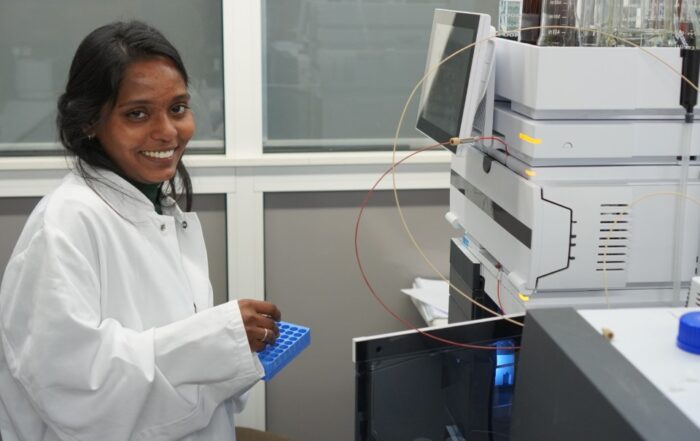
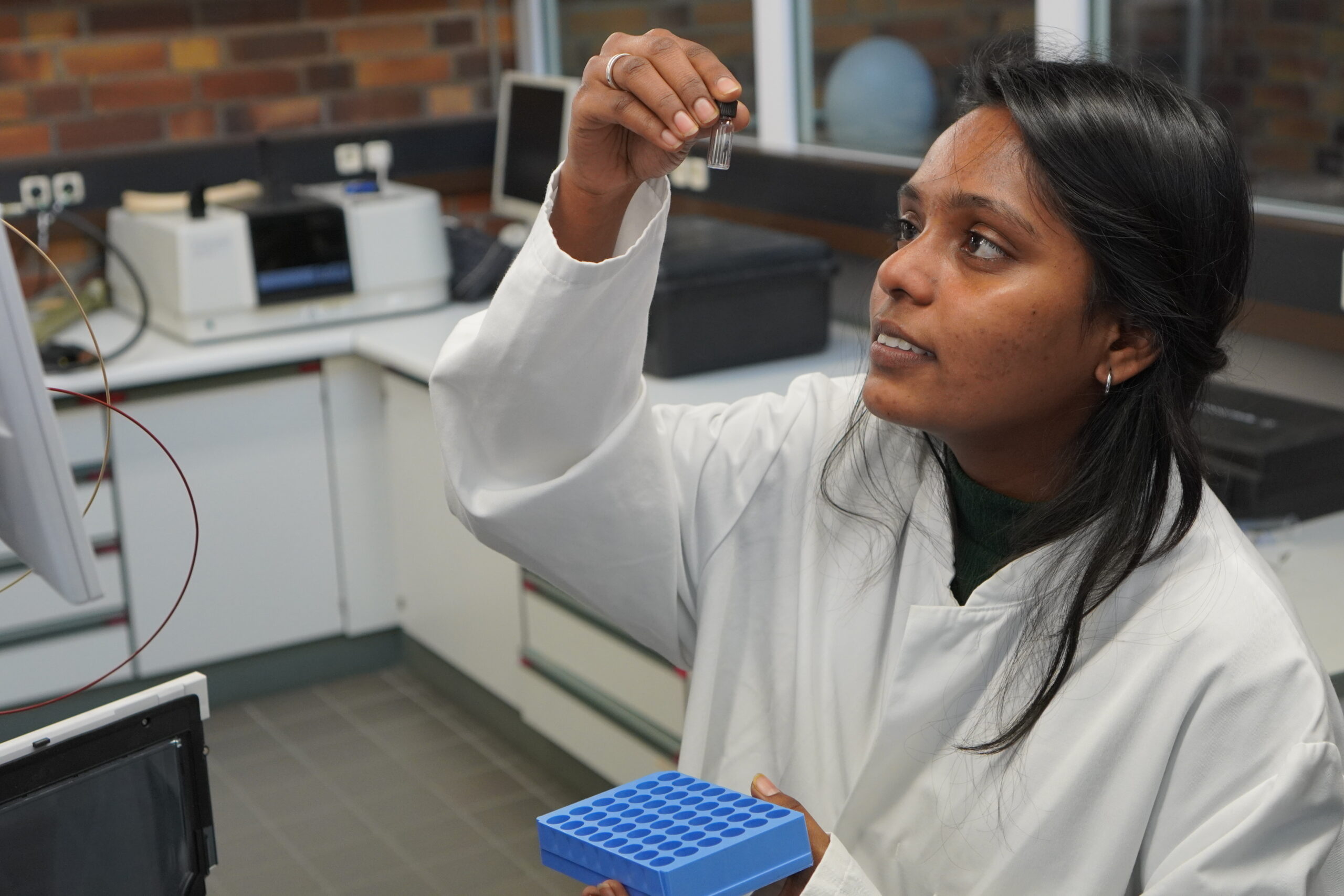
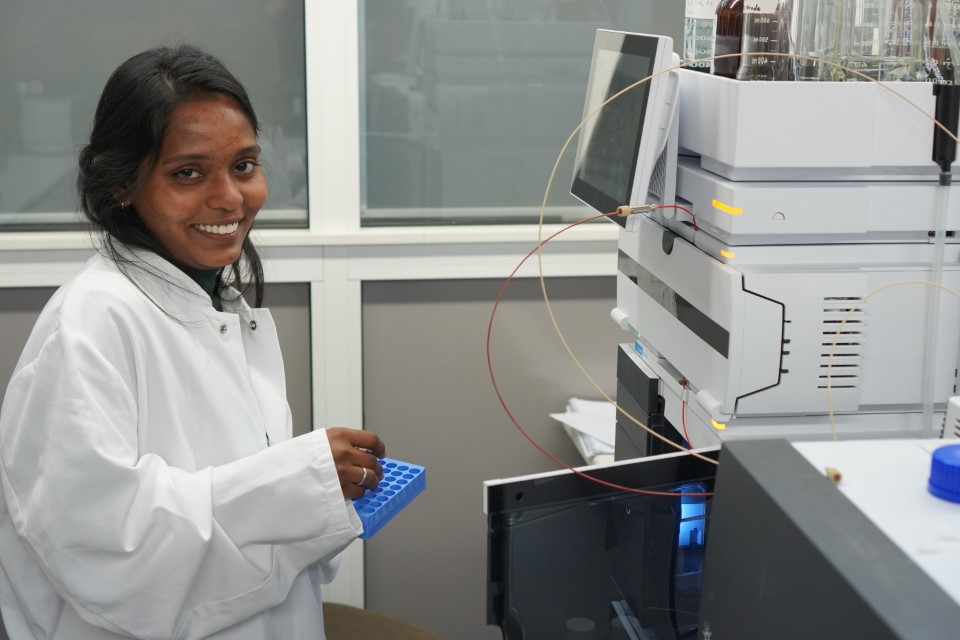
Pavithra Rajkumar. Foto: Andreas T. Wolf / Coburg University
c37754a4-1d39-4991-a447-975ca79a6767
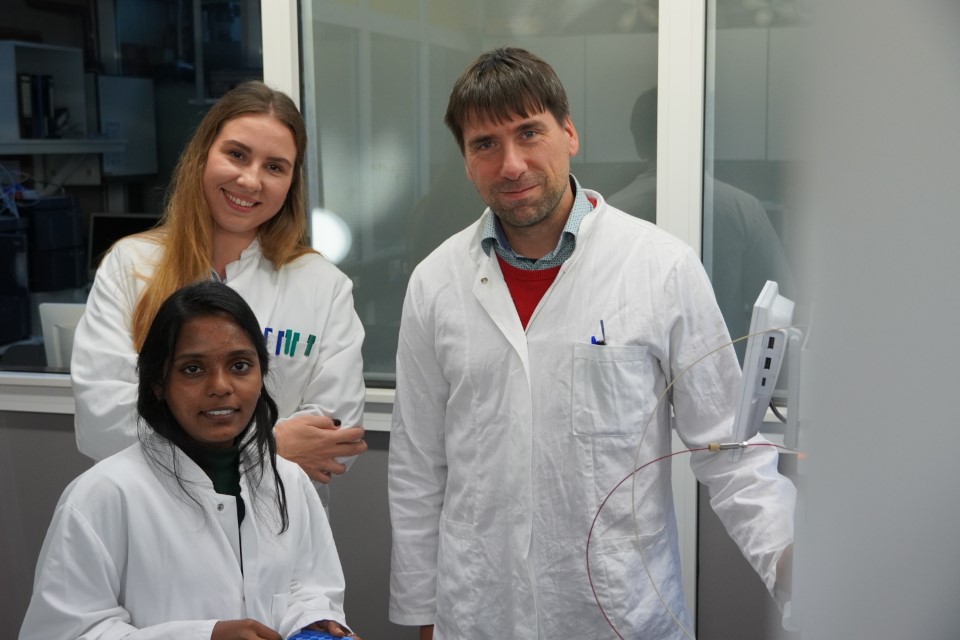
Pavithra Rajkumar, Katarina Pecić, Prof. Dr. Stefan Kalkhof. Foto: Andreas T. Wolf / Coburg University
967b95c6-62d5-4c22-930c-7bcee29ef191
Pavithra Rajkumar. Foto: Andreas T. Wolf / Coburg University
(Andreas T. Wolf)
Pavithra Rajkumar’s path from India to Germany reflects her commitment to addressing real-world health challenges through science. Her journey began with the goal of making a meaningful difference for people affected by neglected diseases. She is currently based at Coburg University of Applied Sciences, where she applies advanced analytical techniques to a major public health issue while pursuing her joint PhD at the department of Biological Sciences, SRM University AP in India.
Understanding Elephantiasis and Its Impact
Elephantiasis, or lymphatic filariasis, is a tropical disease caused by parasitic worms transmitted by mosquitoes. These parasites block the lymphatic vessels, leading to severe and sometimes permanent swelling—most often in the legs, arms, or genitals. This swelling, known as lymphoedema, can cause tissue thickening, pain, and long-term disability. Over 120 million people worldwide, primarily in tropical regions, are affected.
Rajkumar studies small protein markers in blood that reflect biological changes during treatment to understand how patients recover. Her research aims to uncover the biological mechanisms underlying recovery rather than merely confirming clinical improvement. She collaborates closely with the Institute of Applied Dermatology (IAD) in India, which has developed an integrative treatment protocol for lymphoedema—a chronic condition caused by lymphatic filariasis. IAD’s approach has shown remarkable success in reversing lymphoedema through this integrative methodology.
“My work seeks simple and reliable biomarkers to better monitor treatment progress and to personalize therapy,” Rajkumar explains. She is supported by Prof. Dr. Stefan Kalkhof at Coburg University within the Analytics4Health doctoral program, which offers interdisciplinary training and close cooperation with the Fraunhofer Institute for Cell Therapy and Immunology in Leipzig.
Adapting and Growing in a New Environment
Traveling to Germany for her research was a significant change for Rajkumar. She managed unfamiliar tasks like visa applications and finding accommodation with growing independence. Coburg University’s welcoming culture and supportive mentors made the transition easier.
Beyond labs and data, Rajkumar appreciates Coburg’s unique combination of peaceful surroundings and rich cultural heritage. The city’s calm pace and friendly community help students and researchers maintain balance between rigorous work and personal well-being.
Improving Lives with Science
Looking ahead, Rajkumar hopes to extend her research into broader fields, bridging human health with environmental conservation. “I want to contribute to science that improves lives and protects nature alike,” she reflects. Her goal is to become an independent researcher whose work serves both people and the planet.
With support from passionate mentors and access to interdisciplinary programs, she is part of the future of health innovation. Prof. Dr. Kalkhof, as Rajkumar’s co-supervisor and head of the Instrumental Bioanalysis research group at Coburg University, plays a pivotal role in supporting her interdisciplinary PhD project. With extensive experience in bioanalytical techniques including proteomics and mass spectrometry, he facilitates access to cutting-edge instruments and fosters close cooperation with international partners such as the Fraunhofer Institute and SRM University AP in India.
Prof. Kalkhof underscores the value of these global collaborations and the many scholarship programs that enable talented researchers like Pavithra Rajkumar to conduct impactful research at Coburg. He describes his role as “opening doors for students, guiding their careers, and advancing scientific innovation in a highly supportive environment.” Coburg University continues to build bridges across borders — advancing science, cultivating talent, and inspiring change.