

Human-oriented architecture and design
Psychology, aesthetics and matching needs in built space
Our built environment is becoming increasingly diverse and complex. This development opens up the opportunity to connect different living environments – but it also brings challenges. Many people feel increasingly uncomfortable in the face of fragmented spaces and artificial environments. It is not uncommon for places to emerge that impair rather than promote well-being. Many people ask: where are the humanity and sense of beauty in architecture that are so often invoked in Sunday speeches? But such terms are vague and ambiguous, and historically they have elicited very different responses.
At the same time, design is based on thousands of years of experience: Forms, spaces and atmospheres that have an effect on people have always been created intuitively. Today, findings from empirical psychology, neuroscience and disciplines such as biology, systems theory, semiotics, sociology and philosophy enable a deeper, scientifically sound understanding of these interactions. Aesthetic experience thus becomes visible as a complex interplay of human needs, perceptions and cultural contexts.
The Master’s specialization in “Human-oriented architecture and design” provides you with precisely this knowledge – and goes beyond it: you will learn how scientific findings can be specifically translated into analysis and design processes – and, above all, how they can be constantly re-contextualized. There is a particular focus on fields of application such as healthcare architecture, healing architecture and evidence-based design. This combination of courses is very rare in Europe and offers you a clear conceptual advantage in the competition for professional skills.
The focus is on fundamental questions:
- What makes designed environments pleasant, stimulating, motivating or stressful for people? How can well-being be increased in different contexts of need?
- What can “good” architecture and design mean in different contexts?
- How can concepts such as beauty or atmosphere be explained and made accessible?
- How can you develop your design in a strong – and scientifically sound! – and argue coherently?
- And above all: How can you as a designer – through space, light, material, color and structure – specifically influence perception, emotion, experience and behavior?
As part of the Mensch & Ästhetik Institute (Coburg University of Applied Sciences and Arts, University of Bamberg), we have brought together studies and findings from many related sciences and developed overarching models of understanding – especially for architects and interior designers! – have been developed. A large number of publications have made these models accessible and well-known. You benefit from the humanities, natural sciences and humanities such as psychology, philosophy, human biology, neuroscience, sociology, semiotics and art history. At the same time – with decades of design and teaching expertise – we can also apply this content to design processes and increase the quality of design and the fit with needs in a very practical and applied way.
This is because a reflective, scientifically based approach to design makes it possible to break away from short-term trends and aesthetic dogmas. Contemporary design in particular gains depth when it is more closely related to human needs and experiences than is often the case in everyday life. This benefits not only healthcare buildings, but all spaces in which people live, work, learn or interact.
This Master’s specialization is interdisciplinary and linked to the other specializations, so that you have many options to choose from. At the same time, however, there is also a binding specialist core that sets a new standard in terms of design argumentation, human-oriented design and scientific background knowledge. One module takes place in cooperation with the University of Bamberg (in the field of architectural philosophy), another on an excursion with foreign university partners. In addition, the connection to the Institute of Man & Aesthetics opens up perspectives for further research and doctoral studies.
What you can expect
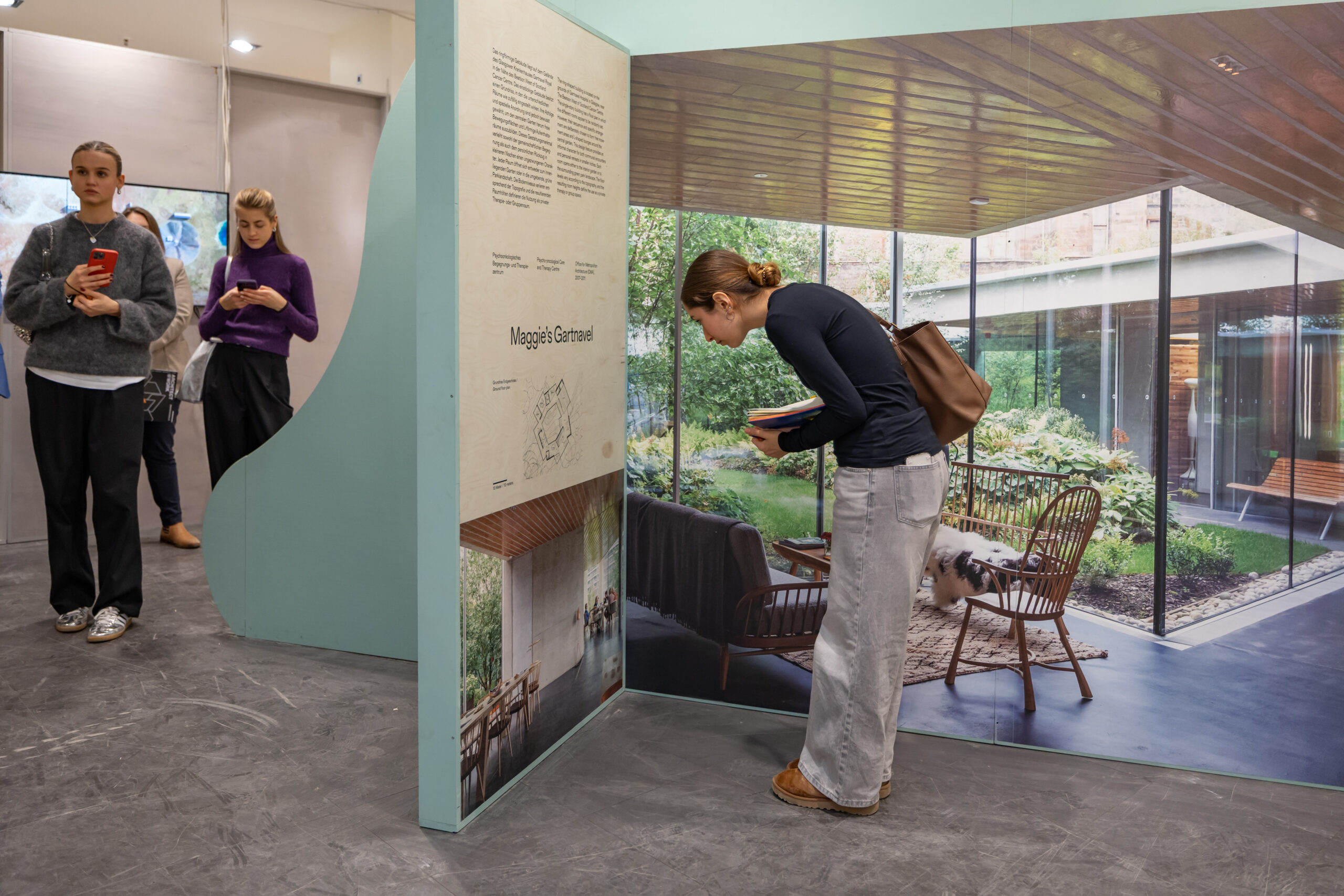
In the Master’s focus “Human-oriented architecture and design”, you will acquire in-depth knowledge from areas such as psychological aesthetics, environmental and architectural psychology and neuroaesthetics. These are combined to form overarching models that you can use to systematically analyze the impact of design and apply it in a targeted manner.
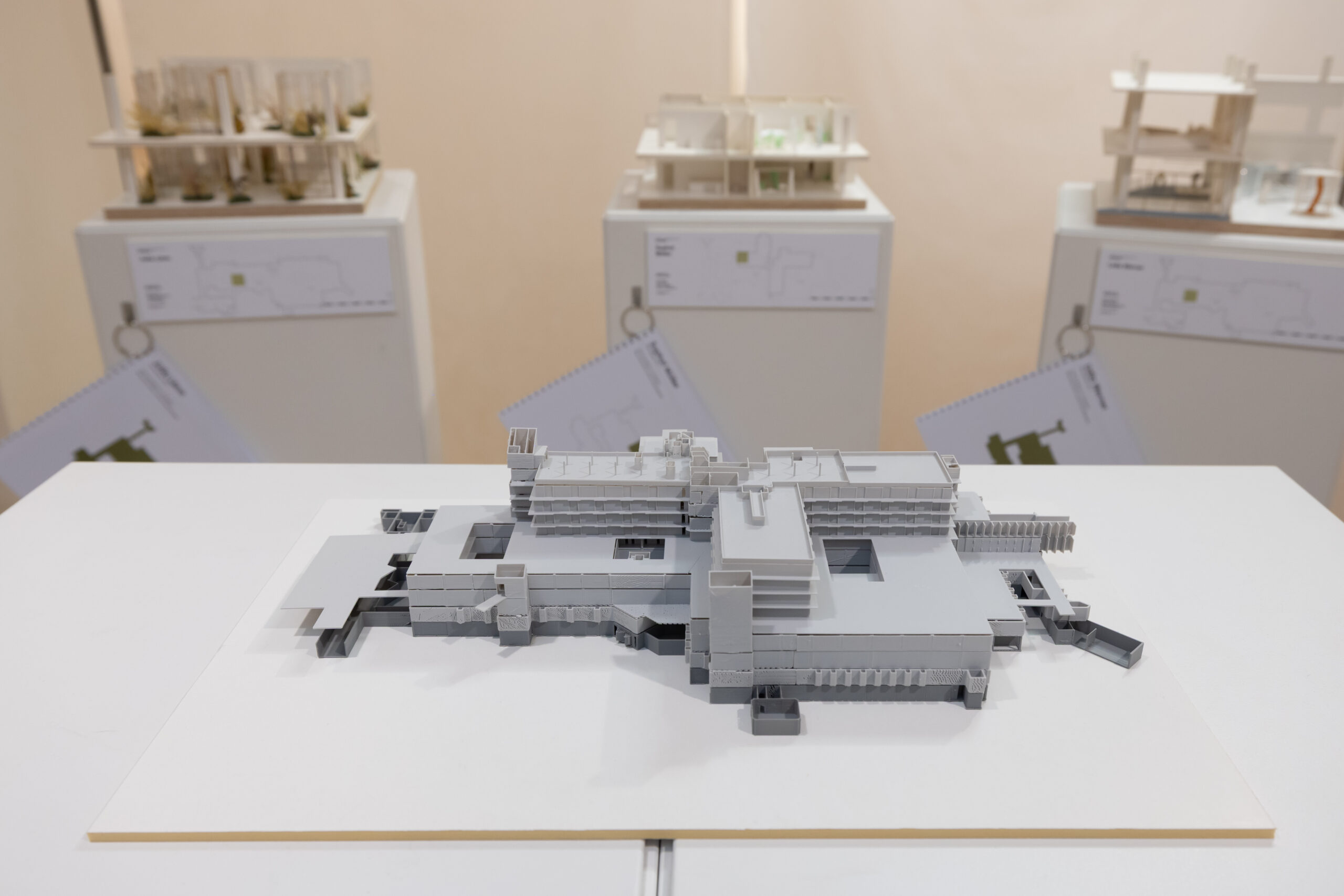
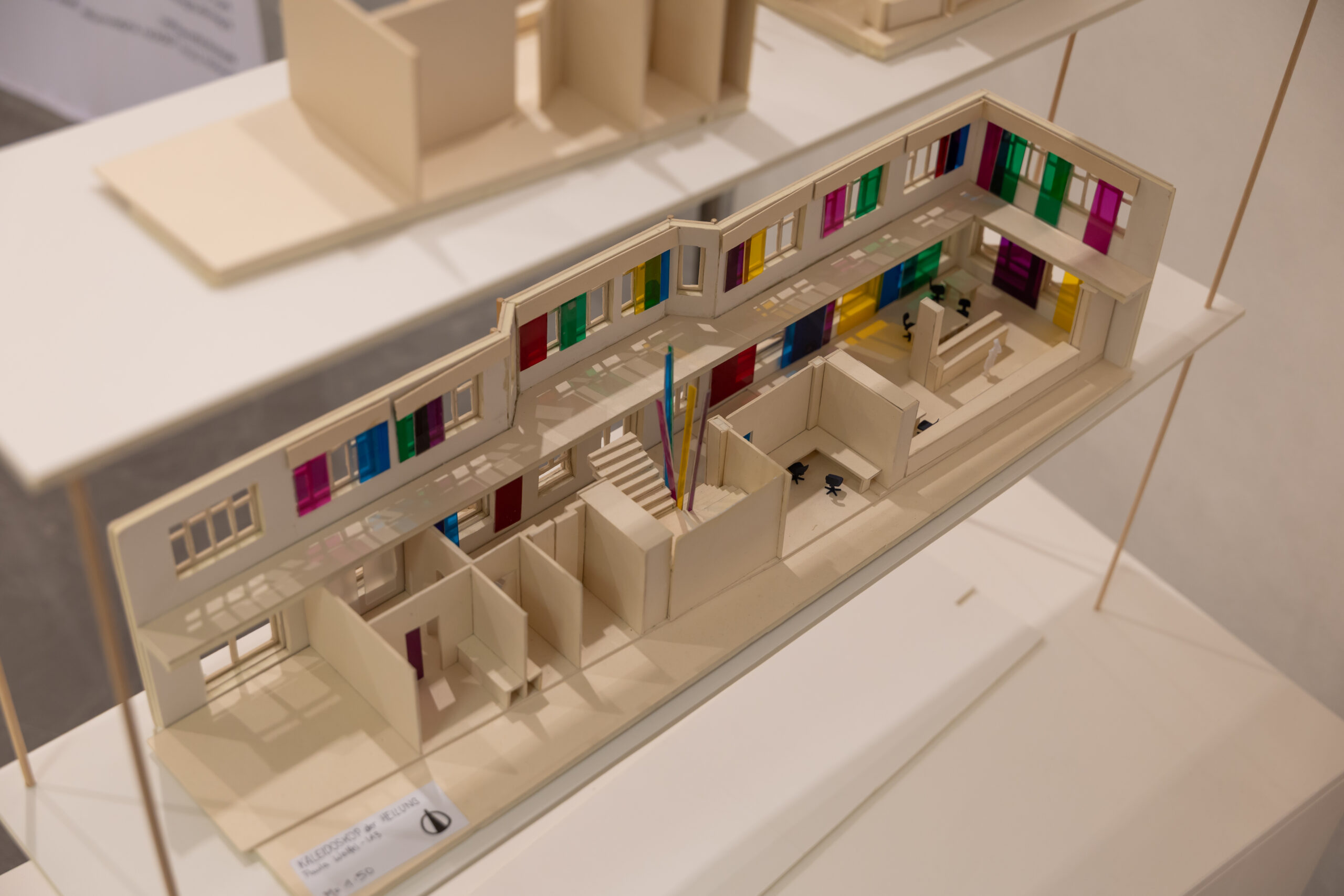
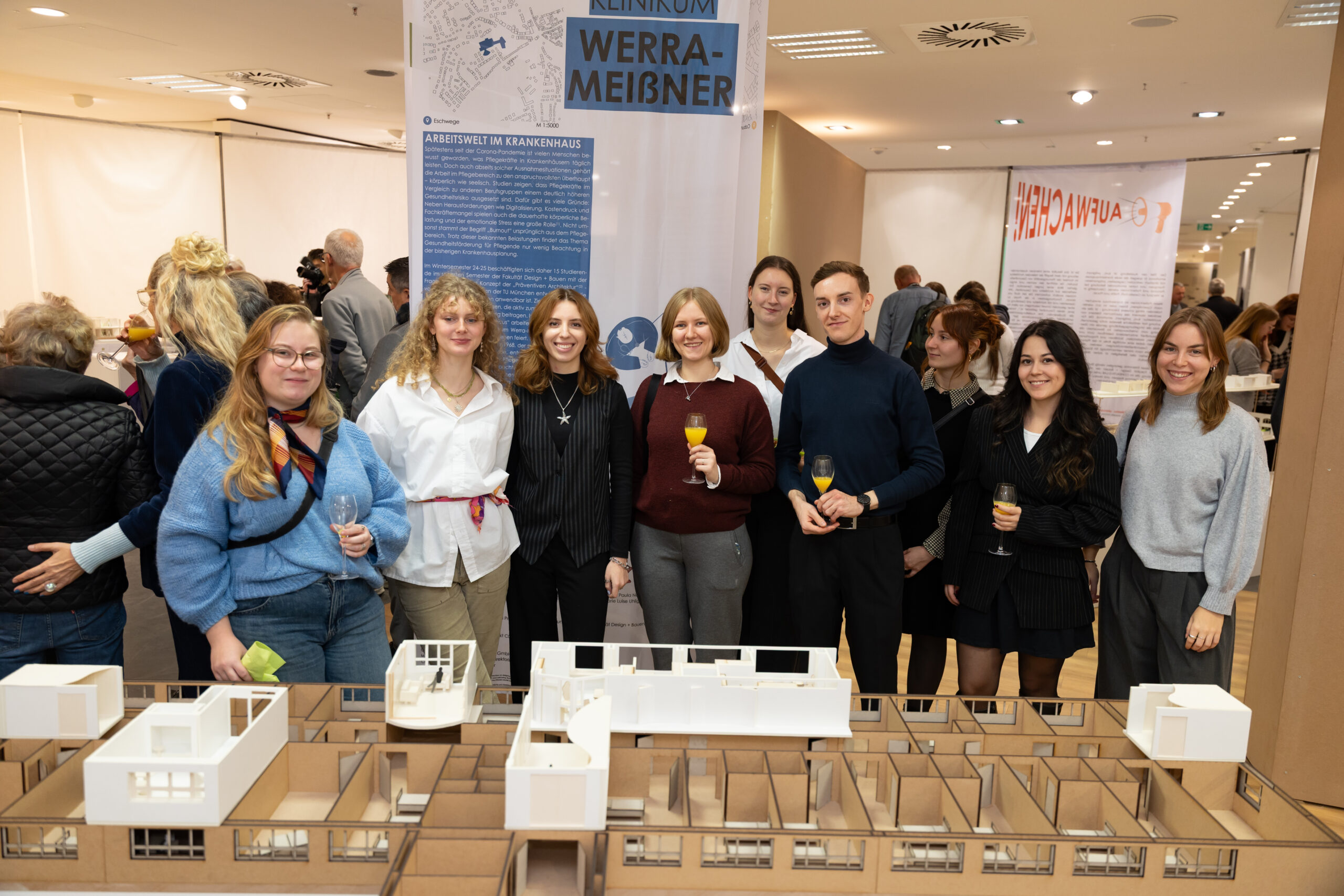
In concrete design projects, for example on healthcare construction or learning and working environments, you will apply your knowledge in a very practical way and thus create a unique combination of scientific knowledge of human nature and reflection with design practice.
You will learn to use design as a tool to develop environments that are geared towards people’s perceptions, needs and values – always in the context of social and cultural conditions.
Career prospects
The skills acquired during your studies are in demand in many areas, including:
- Architecture, interior design and urban planning in general
- Health architecture and health design
- Exhibition, trade fair and museum
- Schools, kindergartens, universities
- Restaurants, public spaces, social activity areas
- Set design, scenography, theater, film
In short: wherever design has an effect on people.
Contact us
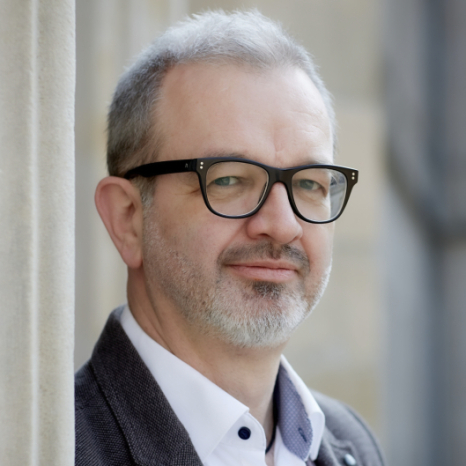
Mentor Prof. Dr. Michael Heinrich
- Faculty of Design + Building, Interior Architecture program
- Institute Man & Aesthetics, HS Coburg & University of Bamberg
- Portfolio
Other mentors from the Interior Architecture degree program are also open to supervising Master’s theses by arrangement and depending on the situation.
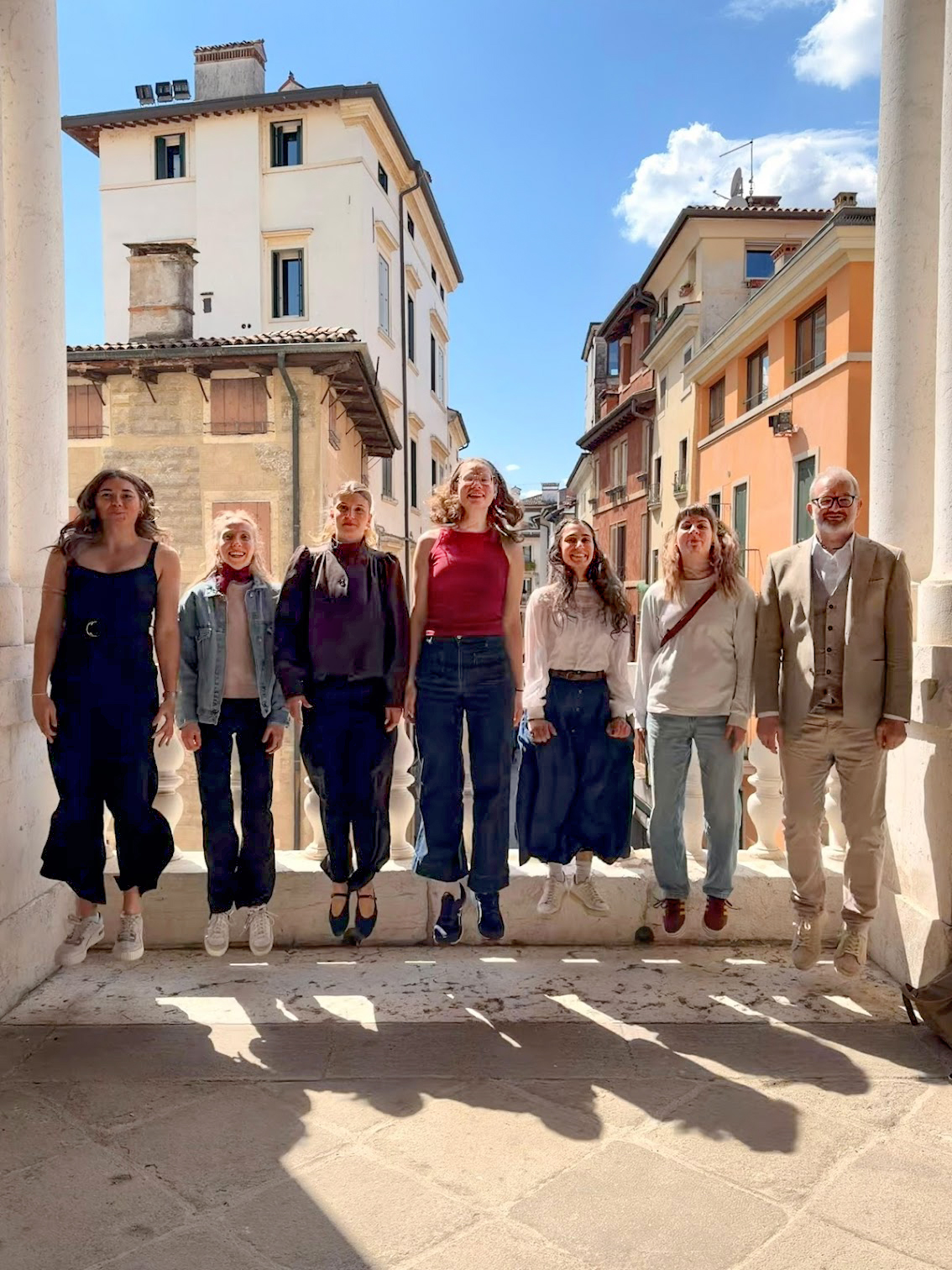
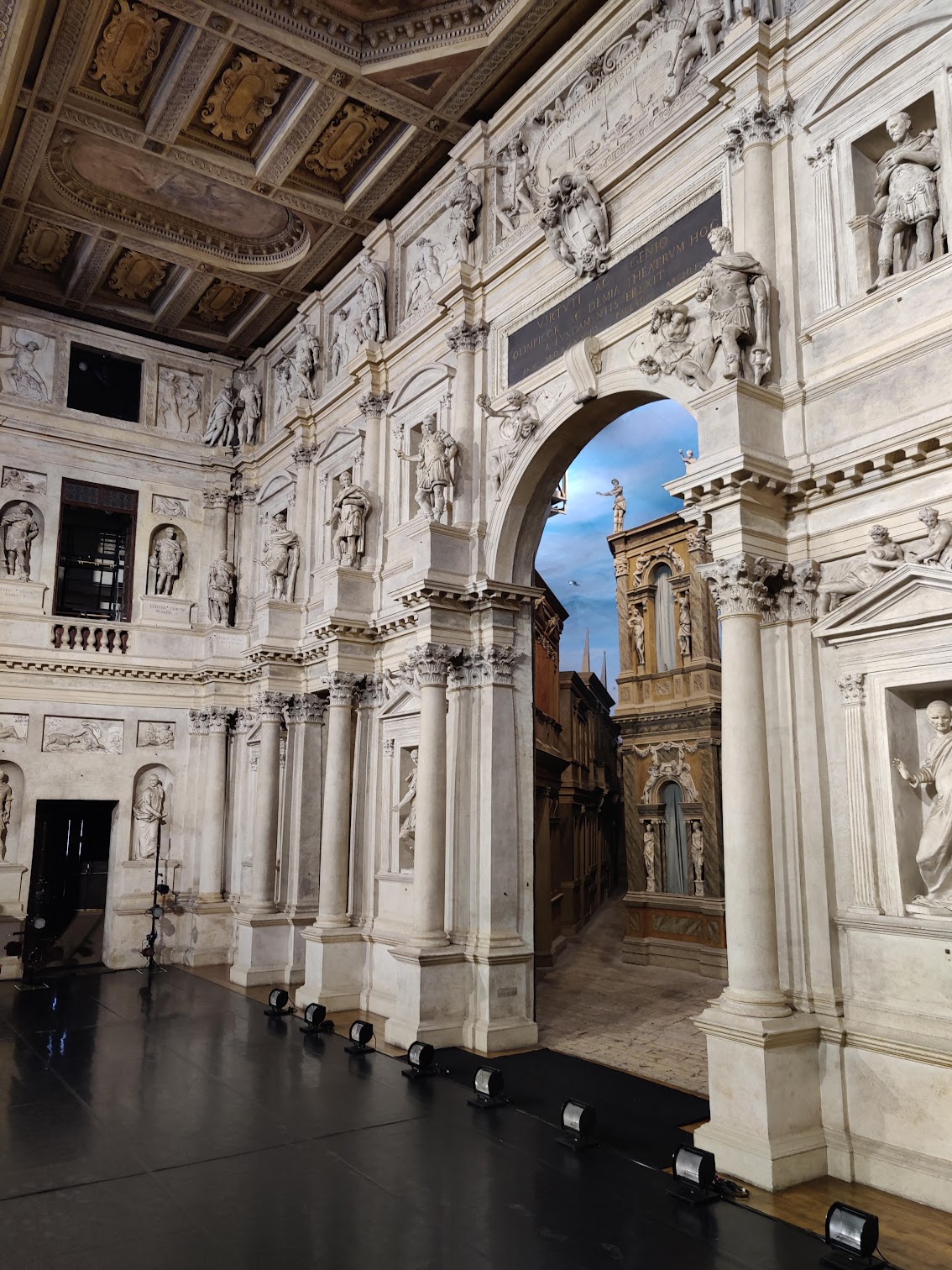
Vicenza Master Excursion 2026
As part of an excursion, students took an in-depth look at the city of Vicenza and examined selected locations from the perspective of psychological aesthetics. The aim was not only to observe urban spaces, but also to consciously perceive and reflect on their atmospheric effect. The following texts provide initial insights into this approach – between personal experience, analytical observation and joint discussion on site.
Psychology of good design: "Beauty is more effective"