

Center for Responsible Artificial Intelligence (CRAI)
AI research: applied, interdisciplinary and responsible
 As a research institute at Coburg University of Applied Sciences and Arts, the Coburg University Research Center for Responsible Artificial Intelligence (CRAI) is committed to interdisciplinary and applied AI research that takes ethical considerations into account (“responsible AI”). It pursues interdisciplinary and application-oriented research in the field of artificial intelligence (AI) from a holistic perspective. It brings together the diverse research activities of AI researchers at Coburg University of Applied Sciences and Arts, thereby developing a distinct research profile to achieve excellence in applied AI research.
 The CRAI also aims to act as an institution that brings AI closer to companies in the region and makes them more competitive through holistic approaches that take into account technical, business, legal, social and other aspects.
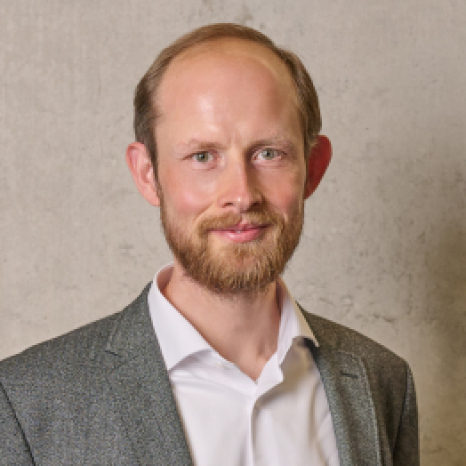
Prof. Dr. Mirko Kraft
The CRAI supports AI researchers at Coburg University of Applied Sciences and Arts in gaining access to AI computing resources and operates research laboratories, including those in the HTAplus modular building. While the CRAI’s laboratories are physically located in the HTAplus modular building on the freight yard grounds, AI research activities take place throughout the Coburg–Kronach–Lichtenfels innovation triangle. Both internally and externally, it serves as a platform for AI networks in the region, in line with Coburg University of Applied Sciences and Arts’ strategy.
Researchers from all faculties also contribute their discipline-specific AI activities (e.g., in autonomous driving and sensor technology), substantially expanding the CRAI’s expertise. The CRAI’s unique selling point is the balance between technical and ethical-societal expertise, which helps ensure that the technical innovations being researched and developed also contribute to shaping the world in a direction in which we, as citizens, would like to live.
It does not do justice to the field of artificial intelligence (AI) to view it from only one perspective—particularly from an exclusively methodological standpoint of computer science or a purely economic perspective. Across the board, social, ethical, and regulatory aspects must always be taken into account to ensure the sustainable and responsible use of AI. More and more companies in Germany are actively using AI—not only for automation but also to expand their business models. The CRAI positions itself as a bridge between research and practice to address both technical-computational and societal-ethical issues. The CRAI provides technical methods and tools (“AI methods”) that are applied and further developed across many disciplines. In addition, expertise from the fields of economics, the social sciences, and the humanities is integrated to ensure that applications are economically viable, ecologically and socially sustainable, and ethically sound.
Two AI professorships secured through the AI competition (Bavaria’s High-Tech Agenda) serve as prime examples of this, namely the
- Professorship for Explainable and Responsible Artificial Intelligence in Insurance(Faculty of Business Administration and Economics) and the
- Professorship for Artificial Intelligence and Data Stream Mining(Faculty of Electrical Engineering and Computer Science).
Opening of the New CRAI Building at Coburg University of Applied Sciences and Arts
Insights
You are currently viewing a placeholder content from YouTube. To access the actual content, click the button below. Please note that doing so will share data with third-party providers.
More InformationPodcast
You are currently viewing a placeholder content from Spotify. To access the actual content, click the button below. Please note that doing so will share data with third-party providers.
Construction of the HTAplus modular building
You are currently viewing a placeholder content from YouTube. To access the actual content, click the button below. Please note that doing so will share data with third-party providers.
More InformationOngoing projects
- GENESIS – Synthesis of training data in the field of cybersecurity
- VoLLKI – Learning environment for individualized learning opportunities
- Kick-PV – Method for remote diagnostics and performance prediction of photovoltaic systems
- AI4Coping – use of AI for stress management
Call for Study Participants: VR-Based Hygiene Training
We are currently seeking interested participants for a study on VR-based hygiene training in kitchen settings. The study is part of the AI4Coping research project.
The study will be conducted over three sessions:
First appointment:
A visit to your own kitchen, during which samples will be collected at designated locations. You will also be asked to fill out short questionnaires (approx. 30 minutes).
Second session:
Participants will receive hygiene training—either as a VR training session or via video, depending on their group assignment. Afterward, they will complete another set of short questionnaires (approx. 30 minutes). This session will take place at the university.
Third appointment:
Final visit to your own kitchen, with samples taken again from the same locations (approx. 30 minutes).
As a token of appreciation, an expense allowance of 20 € will be provided at the final appointment.
Those interested can contact Julie Feimer by email (julie.feimer@hs-coburg.de) or by phone at +49 (0)9561 317-587. Alternatively, you can register via an online calendar, which can be accessed using the QR code on the flyer.
Localization
The CRAI is located in the newly constructed HTAplus modular building on the former abattoir site – directly opposite the Alte Kühlhalle. The Free State of Bavaria has invested around €4.1 million from the HighTech Agenda Bayern (HTA) for the modular building.
Address
Coburg University of Applied Sciences
Schlachthofstraße 3
96450 Coburg