


Automotive Laboratory
Brief description
The Automotive Laboratory brings together research on electric vehicle powertrains across the entire technological spectrum—from battery technology and power electronics to electric motors and overarching energy and thermal management. The goal is to identify and evaluate new technological possibilities in these fields, combine them in a way that yields benefits, and explore them at the component and system levels. In doing so, the opportunities presented by artificial intelligence and the impetus from autonomous driving are actively incorporated into the solution-finding process. This technological breadth provides a unique foundation for the development of new ideas and competitive products, which can be prototyped in the automotive laboratory and evaluated and optimized on a roller dynamometer.
Location: The Automotive Laboratory is located in rooms 6-004 through 6-007 on the Friedrich Streib Campus.
Laboratory equipment
- Battery Measurement Technology at the Cell and Pack Level
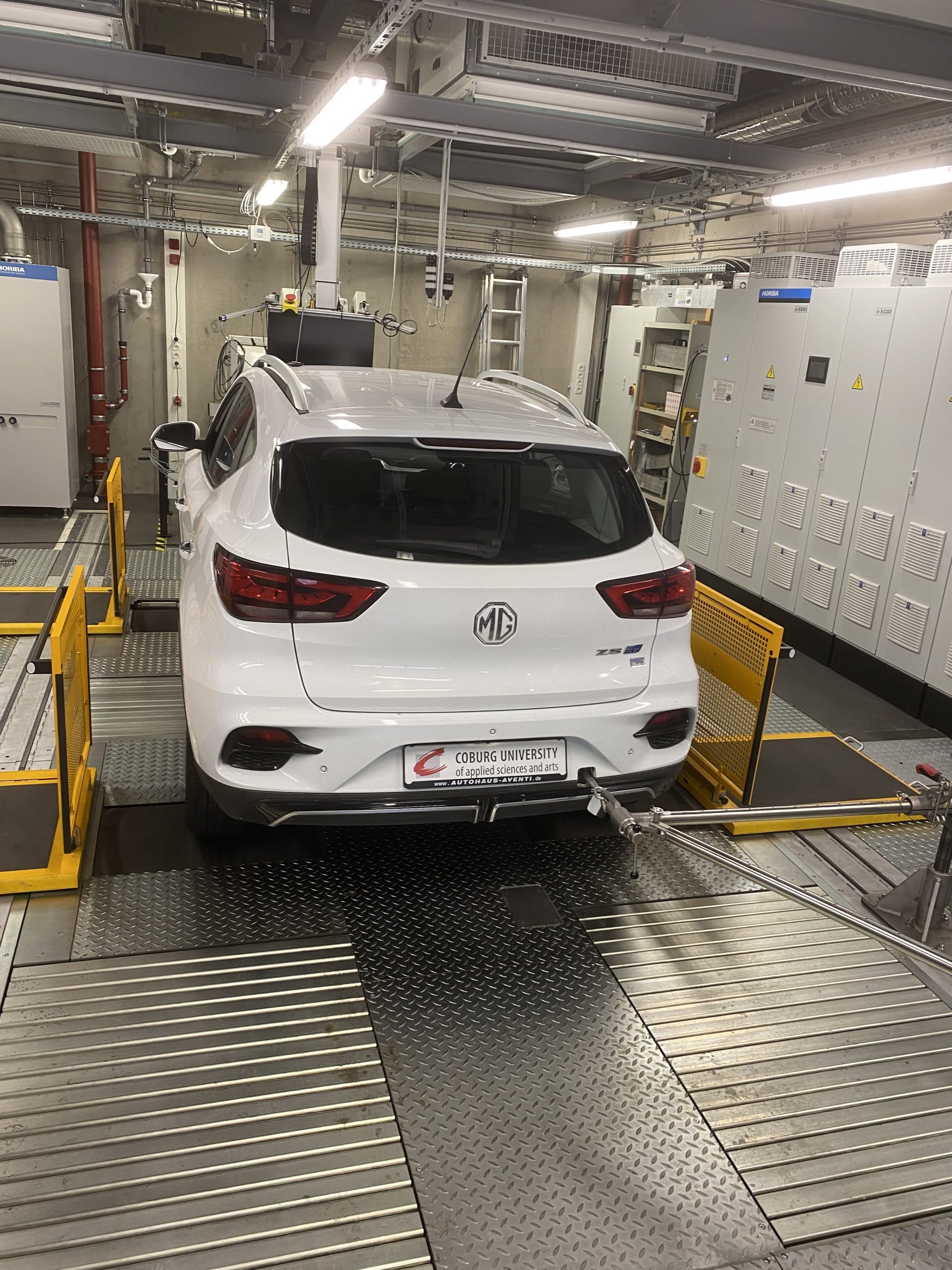
- Roller dynamometer for vehicle characterization
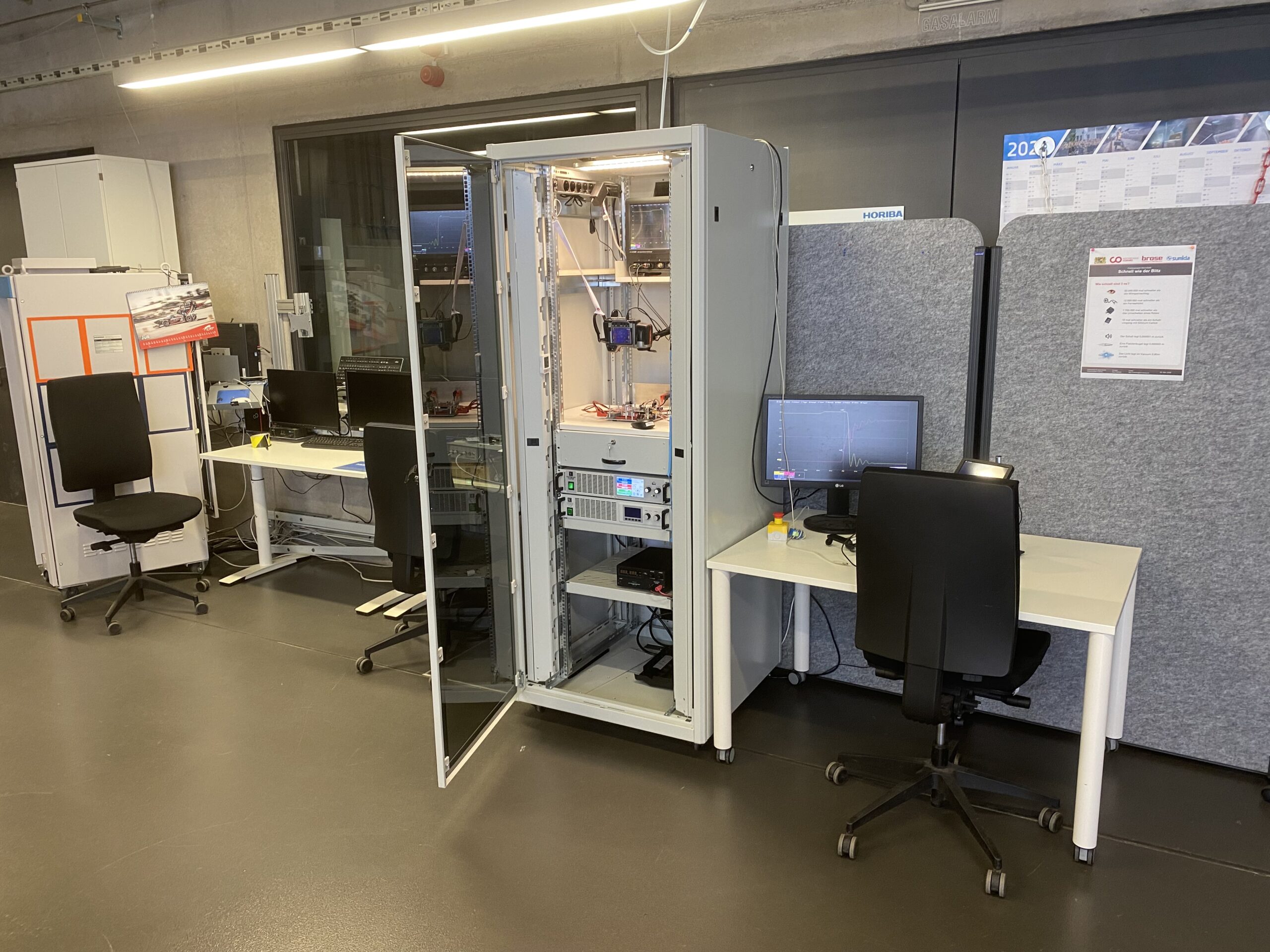
- Power meter for electric drives and their power electronics
- Electrical impedance analyzers for characterizing battery cells
- Bidirectional laboratory power supplies and various electrical loads
- Motor test bench for measuring electric motors
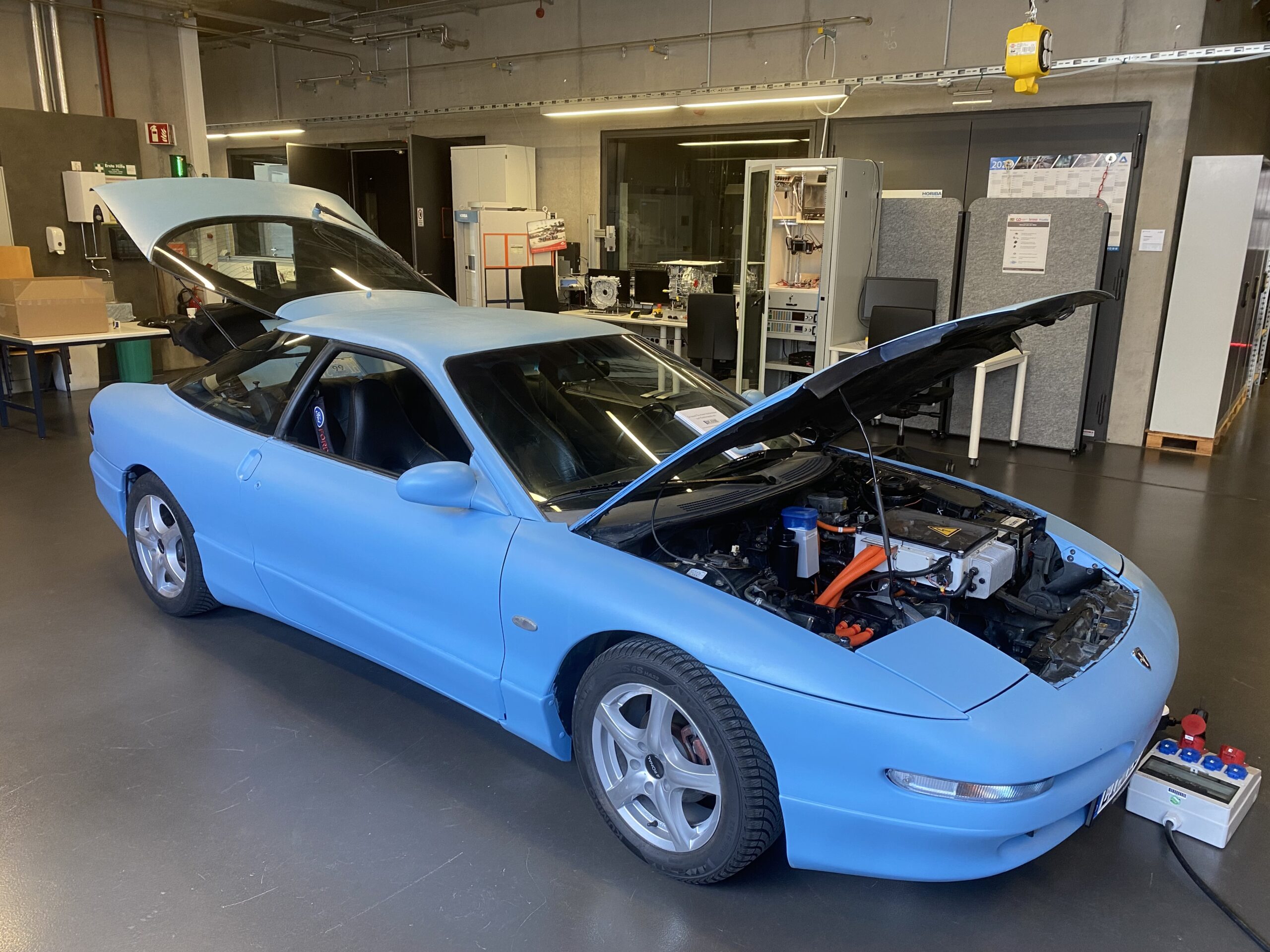
- Various test vehicles, e.g., a BMW i7 edrive
- Vehicle workshop diagnostic system
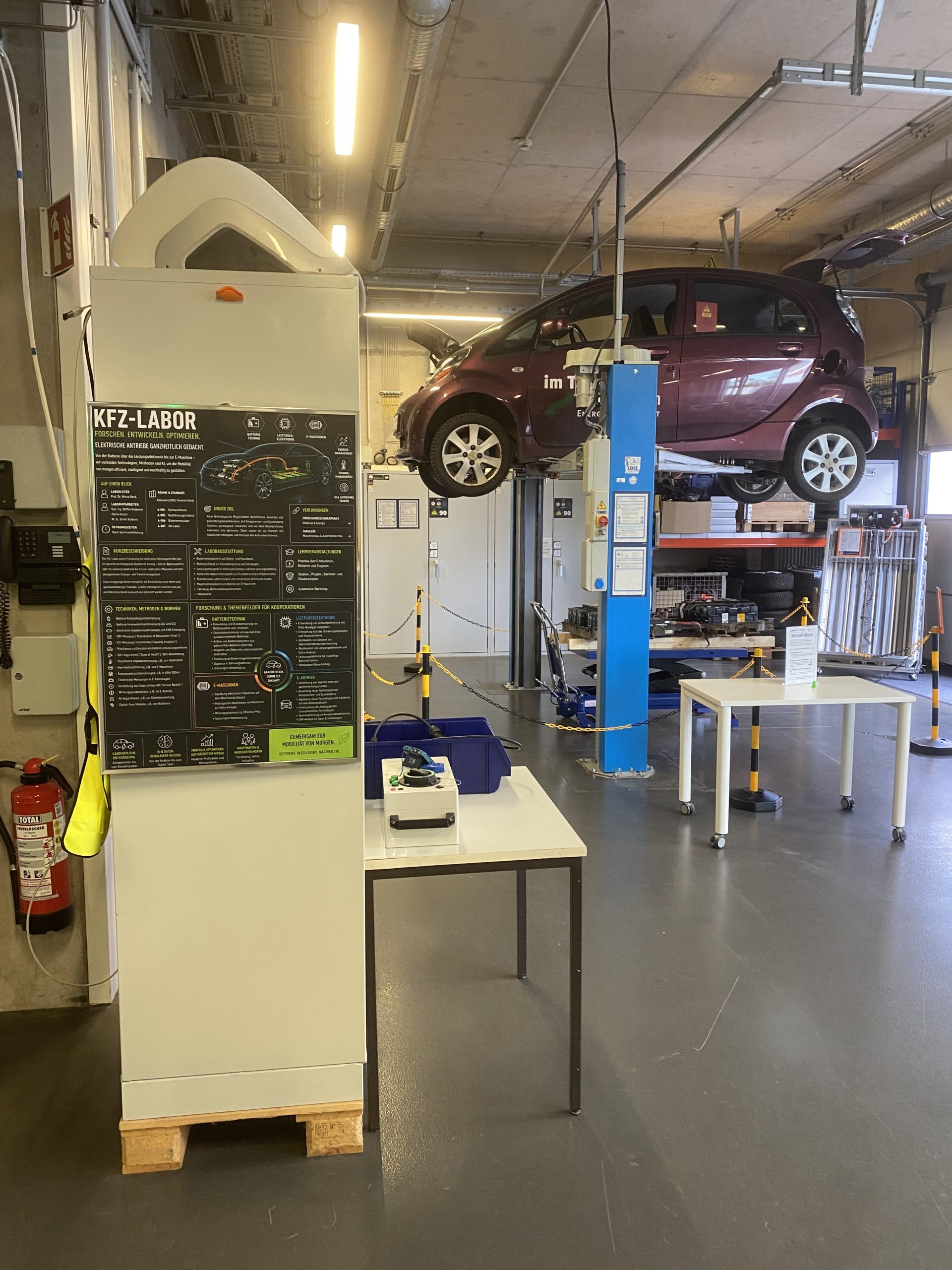
- Lift
Courses held in the laboratory
- Internships in Electric Motors, Batteries, and Diagnostics
- Research Papers, Project Papers, Bachelor’s Theses, and Master’s Theses
- Automotive Workshop
Techniques, methods and standards established in the laboratory
- Battery Discharge Capacity Measurement
- Battery Internal Resistance Measurement (AC and DC)
- Electrical impedance spectroscopy and ESB generation
- DRT Measurement (“Distribution of Relaxation Times”)
- ICE measurement (“Incremental Capacity Analysis”)
- Battery modeling, e.g., SEI growth
- SOH (State of Health) algorithms
- Thermal impedance measurement, e.g., of semiconductors
- Characterization, e.g., of electric motors
- Energy consumption measurements, e.g., in kWh/100 km
- Electrical Measurements in Electric Vehicles
- Data visualization using VR (“Virtual Reality”)
- Efficiency analyses, e.g., in electric drives
- AI algorithms, e.g., for data analysis
- Digital twin models, e.g., of batteries
Research and topics for cooperation
Battery Technology Collaboration Area:
- Development and Characterization of Battery Cells and Modules
- Condition assessment of batteries returned from the field
- Construction of battery storage systems from used batteries (second life)
- Comparison of cells with different chemistries
- Development of battery management systems
- Diagnostics for vehicle batteries
- Training/Continuing Education
Collaboration Area: Power Electronics:
- Development of Power Electronics Using Wide-Bandgap Semiconductors
- Research into hybrid circuit topologies and control methods
- Application of sensor technology for junction temperature measurement
- Modification of power electronics and delta analysis
- Power Electronics for Future Battery Chemistries
- Training/Continuing Education
Collaboration Area: Electric Machines:
- Testing of electric machines on the machine test bench
- Prototype modifications to machines for delta analysis
- Efficiency measurement, efficiency map
- Training/Continuing Education
E-Drive Collaboration Area:
- Generating ideas for new and optimized components
- Evaluation of new technologies at the component and system levels
- Application of new technologies and testing on the roller dynamometer
- Investigation of the interdependencies among different technologies
- System and component optimization
- USP analysis for ideas and technologies