


Laboratory for Electrochemical Energy Systems
Brief description
The laboratory focuses on various areas of electrochemical energy conversion and storage on a laboratory scale (in particular, hydrogen technologies, CO2 recycling, and battery electrodes), as well as processes involving electrocatalysis and photocatalysis, degradation, homogeneity, and lifetime analysis, as well as related material and cell development or modification.
Target audiences for these activities include:
• Laboratory courses at the bachelor’s and master’s levels in the field of energy technologies.
• PR events and presentations, e.g., for companies, high school students, and the interested public.
• Student projects, practical projects, bachelor’s theses, and master’s theses in the areas of the topics mentioned above.
• Research conducted as part of commissioned work and collaborations with industry.
• Research conducted as part of externally funded projects.
Location: The Laboratory for Electrochemical Energy Systems is located in Room 6-209 on the Friedrich Streib Campus.
Laboratory equipment
The lab is still under construction.
- Graphtec GL840-WV-EU Data Logger, 20-channel, optionally expandable to 200 channels, 300 Vss, sampling rate 10 ms to 1 hour, USB, LAN
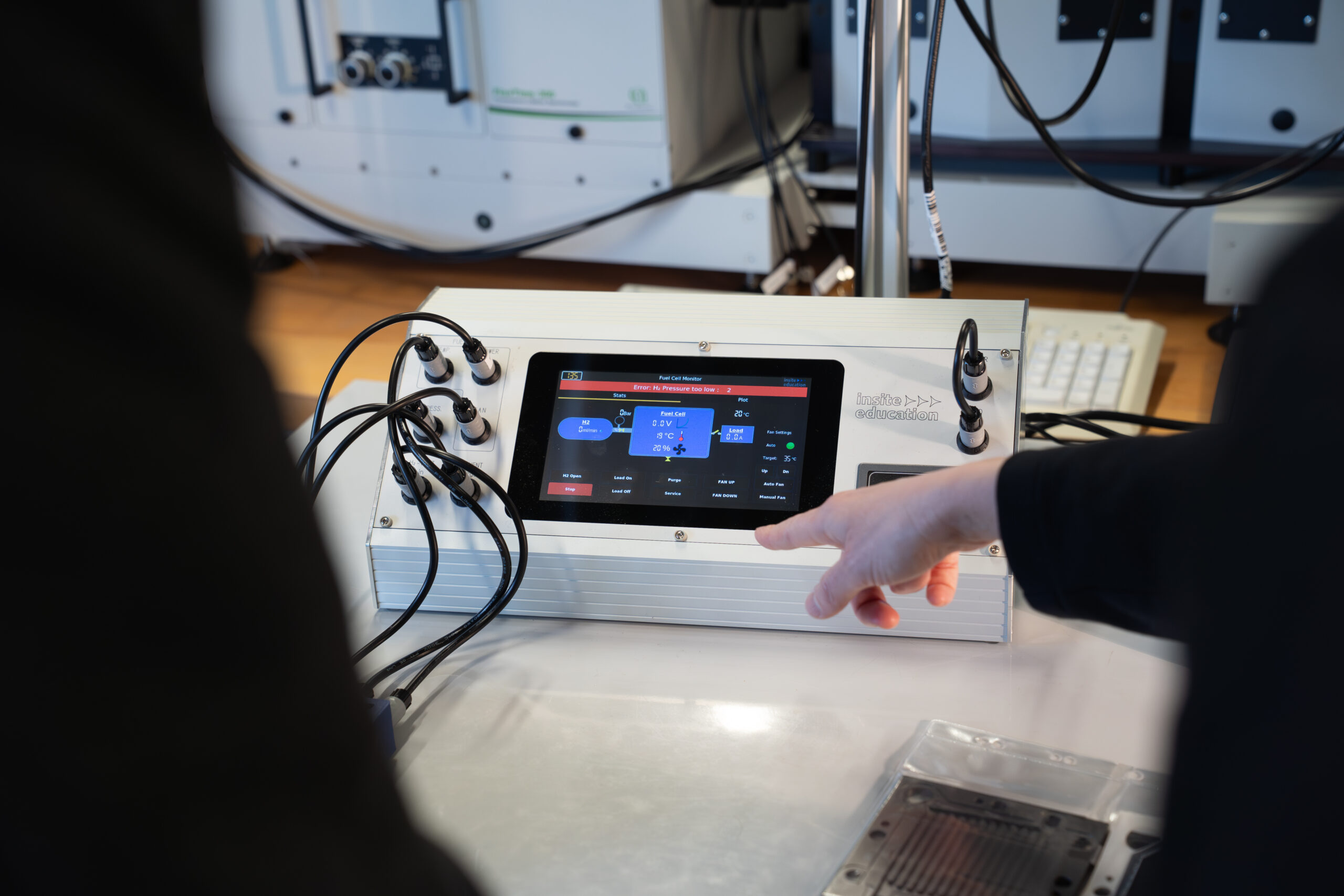
- H2 Engineering Kit 2.0, test bench with a 20 W H2 fuel cell stack, control box with integrated touchscreen, electronic load, and temperature and pressure sensors.
- HYDROFILL PRO, hydrogen generator for easy filling of mini metal hydride cartridges.
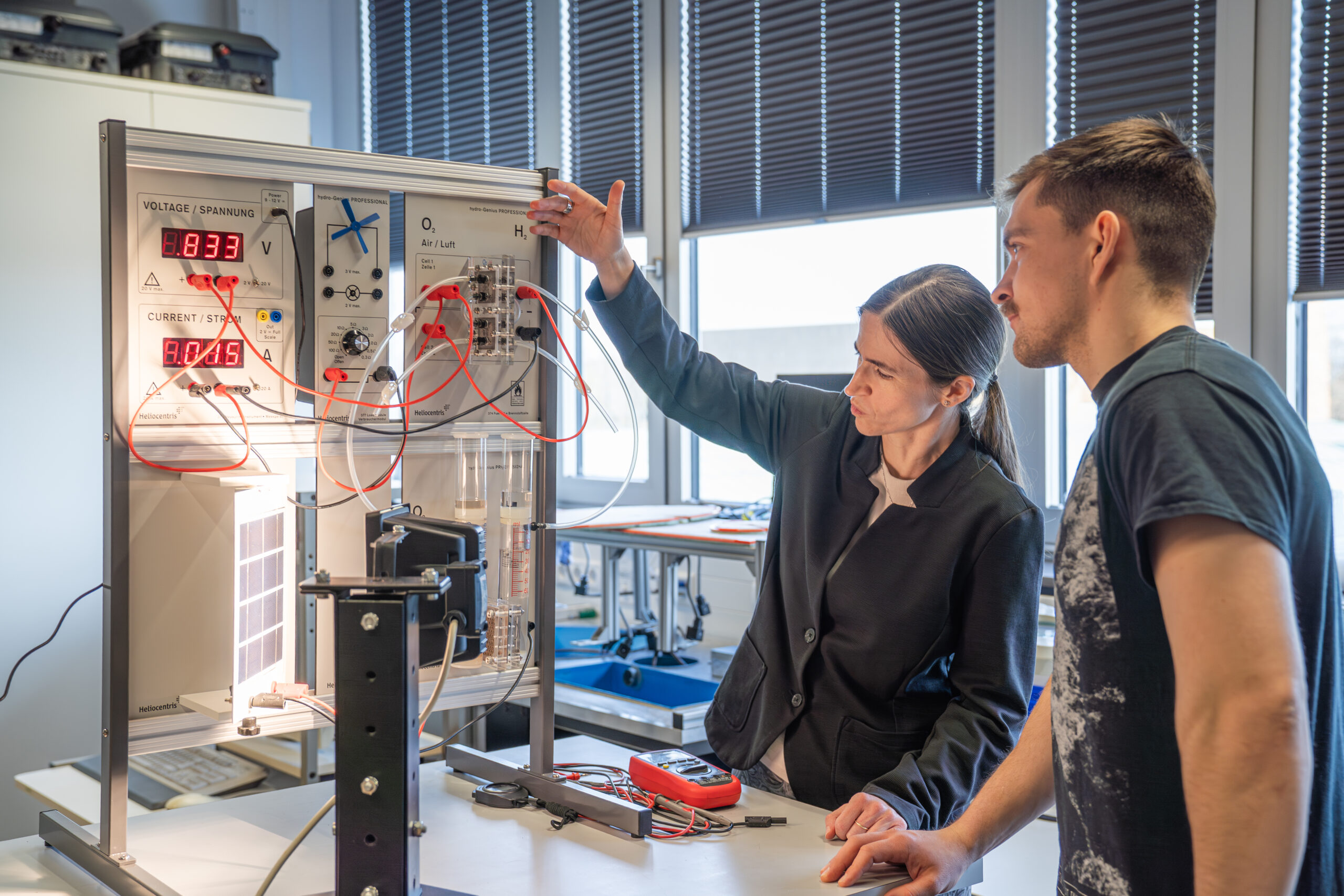
- H2-Professional Complete (Heliocentris), demonstrator with dual H2 fuel cells, electrolyzer, solar module, measuring device, and load module.
- Keithley 2461 System Sourcemeter (100 V, 10 A, 1000 W), four-quadrant operation, with electrochemistry measurement system upgrade for potentiostat functionality, EC cable kit, and software.
- Höcherl & Hackl Electronic Load, Model PLI612ZV-PLI21; Operating modes: current, voltage, resistance, and power; 0–20 A / 0–120 V / 0.1–64 ohms / 0–1,200 W; continuous power: 600 W; peak power: up to 1,200 W.
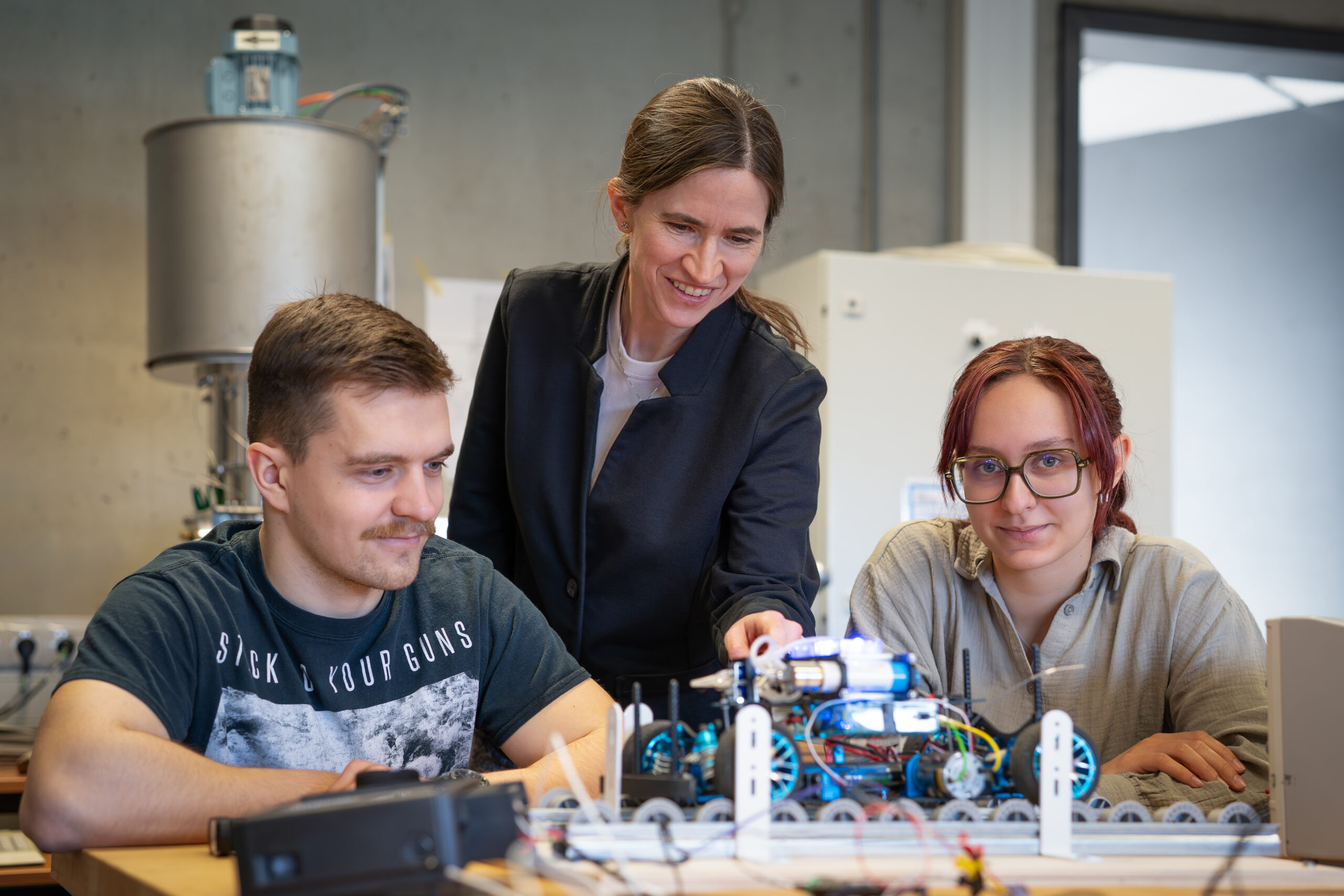
- Model race car with H-Cell 2.0 hydrogen propulsion system for RC hobby racing (Horizon Educational), installed in the Tamiya TRF 417 chassis + additional components (metal hydride storage, motor, battery pack, controller)
- Denios 307140W portable hydrogen sensor
- Sealed electrochemical cell (50 mL) made of borosilicate glass with gas connections (3-electrode configuration)
- Electrolysis cell (3-electrode configuration), 100 mL, with optical quartz side window
- H-type electrochemical cell, 2 × 50 mL, made of borosilicate glass with a replaceable ion-exchange membrane
- WE – RE – CE Electrodes (various)
- Ceramic hot plate/magnetic stirrer (Anzeser), up to 380°C
- In planning: faceted electrode for fuel cell analysis
- In planning: Laser cell for photoactivated material synthesis
- In planning: micromanipulators for electrical contacting in microstructures
- In planning: 1000°C furnace with inert gas supply
Courses held in the laboratory
- Bachelor’s Program in Energy Technology and Renewable Energy | Module “Hydrogen-Based Energy Carriers and Technologies” (WabEnT)
- Bachelor’s Program in Electrical Engineering for Sustainable and Renewable Energy | Module “Chemistry of Energy Materials”
Techniques, methods and standards established in the laboratory
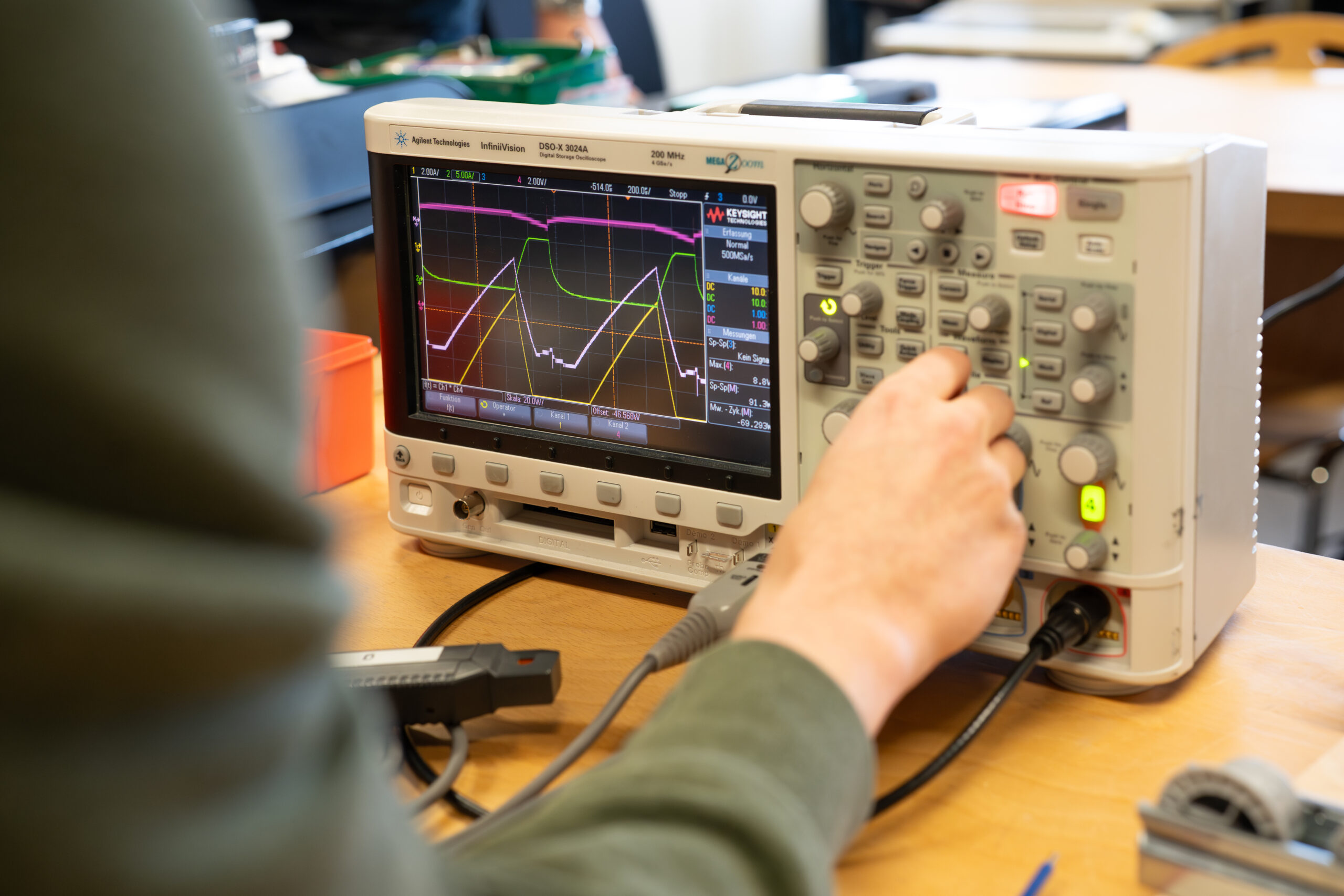
- IV Curve Measurement and Analysis of Electronic, Optoelectronic, and Electrochemical Components
- Surface, structural, and chemical analysis of energy materials and component parts (partly still under development, partly conducted by collaboration partners)
- Functional testing and analysis of various components under continuous operation and extreme conditions (partly still under development)
Research and topics for cooperation
- electrochemical energy conversion (particularly hydrogen technologies)
- electrochemical energy storage (particularly LIB battery electrodes)
- Electro- and photocatalytic processes (particularly H₂ generation and CO₂ recycling)
- Degradation, homogeneity, and lifetime analysis, and related material and cell development or modification
Learn more about the Institute for High-Voltage Engineering, Energy Systems, and Plant Diagnostics (IHEA for short)