


2026 Scholarship Recipients
Tomorrow’s Female Entrepreneurs
foundHER supports women on their path to self-employment and strengthens their entrepreneurial skills. The current scholarship recipients are distinguished by their creativity, dedication, and courage, and are turning their startup ideas into reality. With their diverse backgrounds, experiences, and visions, they contribute to an inspiring network of female founders who support and motivate one another.

Leonie Altmann
“Mind Engineering Studio” was born out of the observation that many high-achieving women project a strong, capable image and function effectively in their daily lives, yet internally they repeatedly find themselves struggling with stress, overthinking, or emotional exhaustion. Often, only the symptoms are visible—not the underlying mental patterns that unconsciously drive decisions, behavior, and stress.
This is exactly where my idea comes in: I develop structured programs suitable for everyday use that help make these patterns visible and consciously change them. The goal is to integrate mental self-management into everyday life in a way that is both understandable and sustainable—rather than just treating symptoms in the short term.
In doing so, I combine technical thinking with several years of training and practical experience in working with mental patterns and beliefs to make mental health more preventative and accessible—especially for women who shoulder a lot of responsibility and consistently perform at a high level.
Leonie Altmann is accompanied by Annika Tessmer.
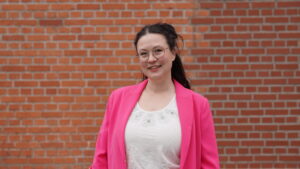
Stella Aschenbrenner
Explain your idea in a few sentences!
KINTAYO® is an analog, modular card set for psychotherapeutic use based on the principle of visual externalization. It helps therapists and patients make depressive symptoms, stressors, and internal processes visible and organize them in a structured way. Through visual and tactile work with the cards, depressive dynamics, symptoms, and internal processes can be made visible in a structured way. This makes complex relationships easier to understand, supports conversations between therapists and patients, and facilitates patients’ understanding of their own illness.
How did you come up with your business idea? What problem are you solving?
The idea for KINTAYO® originated as part of my bachelor’s thesis on “Improving Interaction Between People with Depression and Those Around Them Through Visual Communication.” During my research and exploration of depressive disorders, it became clear that many people affected by depression have difficulty understanding, contextualizing, and communicating their symptoms, thoughts, and emotional processes. Although visual and haptic tools for psychotherapeutic use already exist, they are generally not designed to represent the complex interplay of depressive symptoms. At the same time, current research increasingly suggests that depression often does not consist of isolated individual symptoms, but rather of network-like symptom structures with reciprocal influences.
With KINTAYO®, I want to address exactly this: The card set helps bring individual problem dynamics to light and establish structured connections between symptoms, stressors, and emotional states. This can facilitate conversations between therapists and patients and support emotional access to inner processes that are difficult to grasp. At the same time, KINTAYO® addresses the growing strain on psychotherapeutic care systems: Even today, there is a significant disparity between the number of people suffering from depression and the number of available therapy slots. Current political discussions about cuts to therapy hours are further exacerbating this situation. KINTAYO® is designed to help therapists convey complex concepts more efficiently and sustainably, so that patients have a set of tools at their disposal—even between sessions or after therapy has ended—that they can use to continue working independently. This is also intended to strengthen relapse prevention in the long term.
Stella Aschenbrenner is accompanied by Julia Lindner.
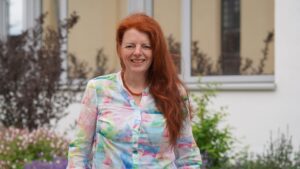
Nicole Brückner
Explain your idea in a few sentences!
It’s time for an innovative learning space concept in science education! The focus is on designing modular research studios that specifically promote independent work, creative problem-solving, and scientific thinking.
How did you come up with your business idea? What problem are you solving?
Building on my experience in designing educational and studio spaces, and drawing on scientific and pedagogical approaches, this project aims to apply the latest findings from learning research and interior design to everyday school life.
The problem: Science classes are often still held in outdated, inflexible classroom layouts that do little to support modern learning methods.
My solution: Well-thought-out, flexible space designs that encourage experimental work and actively engage students in the learning process. This creates learning environments that spark curiosity, foster independence, and make complex content accessible.
The innovative aspect lies in the interdisciplinary combination of spatial design and science education: The result is a transferable design concept that can be further developed based on evidence and scaled to different types of schools. With support from foundHER, the idea will be tested in a prototype, evaluated, and further developed.
The goal is to establish a market-ready offering that supports educational institutions in designing their learning environments with an eye toward the future, as well as to make a lasting contribution to strengthening STEM education.
Nicole Brückner is accompanied by Melanie Becker.

Janine Difour
Explain your idea in a few sentences!
My idea: As a coordinator, I connect extracurricular partners—such as clubs, cultural professionals, and volunteers—with Coburg’s elementary schools and full-day program providers. In this role, I handle the planning, coordination, and quality assurance of these programs; I can implement some of them myself; and in this way, I support the integration of diverse educational and recreational opportunities for children into the full-day program—thereby easing the burden on everyone involved.
How did you come up with your business idea? What problem are you solving?
With the legal right to full-day care for elementary school children set to take effect in 2026/27, the demand for high-quality programs is increasing—yet there is a lack of staff, networks, and coordination. Many clubs and organizations—which often provide valuable extracurricular educational programs on a volunteer basis—fear that children will no longer find their way to them because they will be staying at school longer due to the full-day program. Many would like to get involved in the full-day program but don’t know how.
As a basketball coach with many years of experience working with children ages 6 to 11, I see every day how sports can spark a love of physical activity and foster personal development in many ways. I want to use my expertise and passion to build bridges between schools and after-school programs—to create a high-quality full-day program that offers children and parents more than just childcare.
Janine Difour is accompanied by Friederike Fischer.

Patricia Firsching
Explain your idea in a few sentences!
I develop workshops for women that combine the themes of mental health, self-reflection, and creative expression. The workshops combine practical psychological insights with creative methods such as journaling, collages, or art projects—without any pressure to perform and with a focus on consciously setting aside time for oneself. The goal is to create an accessible space for mental relief, self-care, and genuine connection.
How did you come up with your business idea?
For many years now, I’ve been passionate about both creative design and psychological topics. At the same time, I’ve noticed among the people around me that while many women know what would be good for them, they often find it difficult to put this into practice amid the stresses of everyday life. My approach therefore combines creative methods with practical mental health promotion and creates a space for mindful time with oneself.
What problem are you solving?
Many women feel stressed, overwhelmed, or mentally exhausted in their daily lives. Although there is a strong need for intentional breaks and self-care, there is often a lack of accessible options that make mental health support available in everyday life without a therapeutic setting. My workshops create a creative and safe space that facilitates reflection and mindful self-care.
Patricia Firsching is accompanied by Johanna Bischoff.

Pauline Heid
I design 3D-printed table lamps that customers will soon be able to customize in my online store. It’s important to me that customers can help design their lamps and create something that truly suits them—rather than just buying an off-the-shelf product. This results in personalized design pieces with character.
I find 3D printing particularly exciting for custom products because it allows me to create free-form, sculptural designs that are often difficult to achieve with traditional manufacturing methods. Plus, I can produce on demand—that is, only when an order is actually placed—without the need for large warehouses or expensive tools.
The idea came to me because I started printing table lamps for my own home. I wanted to create a warm, peaceful atmosphere and objects that feel thoughtfully designed and make the room more beautiful. That’s exactly the feeling I want to bring to other homes as well.
Pauline Heid is accompanied by Annica Heilborn.
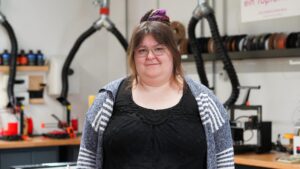
Sarah Haust
My name is Sarah Haust, I’m 28 years old, and I’m studying product design. As part of my studies, I’m exploring how products can better support people in their everyday lives. The idea for my project came from observing that many organizational systems are rigid and offer little flexibility to adapt to individual needs. That’s why I’m developing a modular, 3D-printable organization system that can be flexibly expanded, adapted, and repaired. My goal is to create a sustainable solution that adapts to people—not the other way around.
Sarah Haust is accompanied by Michaela von Aichberger.

Elisabeth Haust-Gottschlich
What’s the story behind hausTgemacht?
Summarize “hausTgemacht” in just a few words? That’s hard! Because I’m bursting with ideas. And I love putting them into action right away. But all my articles have one thing in common: They’re made with love at home!
- Liqueurs, syrups, fruit and vegetable spreads
- Upcycled Products
- Unique Gift Idea
Who is behind hausTgemacht?
HausTgemacht—that’s me, Elisabeth: a free spirit, a nature lover, and a craft enthusiast. In a way, I’m driven by my many ideas. Bringing them to life is what fulfills me.
Is conscious consumption important to you?
Then hausTgemacht is the perfect place for you!
Three really good reasons to choose hausTgemacht.
Elisabeth Haust-Gottschlich is accompanied by Cindy Maaser.
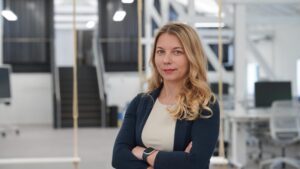
Tetyana Hryhorenko
My Business Idea: AI-Powered Financial Intelligence
A company’s success depends heavily on its ability to understand its finances thoroughly. I am developing an AI-based financial tool for small and medium-sized businesses. My goal is to help business owners better understand their current financial situation and predict future financial trends.
How I came up with the idea
As an MBA student specializing in financial management, I’ve noticed that many financial processes are repetitive and follow clear rules. Such processes can be automated very effectively using AI. Small and medium-sized businesses often lack the resources for expensive financial advisors or in-house AI development. That’s why I want to use my knowledge to build a simple, no-code solution that helps business owners make smarter decisions.
What problem I’m solving
Many small businesses don’t have staff with the expertise to perform complex financial analyses. My tool helps with this:
- Valuable insights: AI provides important answers based on existing financial data.
- Simplicity: The solution is intuitive and easy to understand, even for CEOs without technical or financial expertise.
- Cost savings: An AI solution is much less expensive than human labor.
- Leveraging resources: Companies save money and time, which they can invest directly in their growth.
Tetyana Hryhorenko is accompanied by Thomas Knorr.

Sandra Pollan
My app offers accessible online support for children, adolescents, and young adults who are often completely cut off from their daily school or training routines due to ME/CFS. Initially, the focus is on adolescents aged 14 to 21. The app creates a low-barrier, digital space for coming to terms with the illness, pacing-appropriate relaxation, and gentle exercise, while also providing relief to family caregivers through targeted education.
The key points of the idea:
Focus on young people affected by the issue: The content is specifically tailored to the lives of adolescents and young adults facing similar challenges (e.g., being unable to attend school due to illness, high rates of absenteeism, and social isolation). Its unique selling point is the opportunity for those affected to connect with one another.
The low-threshold nature of the service: Instead of stressful in-person therapy sessions, the app provides therapeutic support that can be carried out at any time from the comfort of one’s bed in small steps (pacing).
Hybrid approach: The app combines self-help resources for those affected (relaxation, acceptance) with valuable information for family caregivers to improve care at home.
It provides immediate assistance without any barriers.
Sandra Pollan is accompanied by Svenja Gallasch.
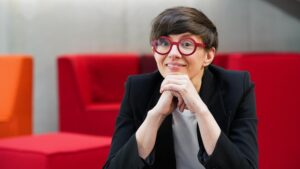
Eva-Christine Waldherr
I am part of a founding team and am developing a female business couture brand that empowers women to make an impact and positions fashion as a transformative force for personal and social change. Our label, HER New York, focuses on on-demand, made-to-measure production of timeless clothing, crafted from sustainable materials with artisanal precision. In this way, we are consciously taking a stand against fast fashion, overconsumption, and disposable fashion, and contributing to the United Nations’ Sustainable Development Goals 5 (Gender Equality) and 12 (Responsible Consumption and Production).
Eva-Christine Waldherr is accompanied by Marie-Christin Ebert.
Overview
The website of Coburg University of Applied Sciences was translated using translation software provided by a third-party provider such as DeepL. The official text is the German version of the website. No liability is assumed, either explicitly or implicitly, for the accuracy, reliability, or correctness of the translations into another language.