


Future Technologies / Emerging Technologies
At a Glance
Academic degree
Bachelor of Engineering (B.Eng.)
Type of Study
Full-time
Standard Duration of Study
7 semesters (incl. practical semester), 210 ECTS
Place of Study
Language of Instruction
German
Start of Studies
Winter and summer semester (October 1 or March 15), also as an orientation semester
Admission Requirements
University entrance qualification, entrance qualification for universities of applied sciences, vocational qualification or foreign educational certificate, no admission restrictions (NC)
Costs
Semester Tuition ( including semester ticket)
Orientation Semester
Individual modules can be taken as part of an orientation semester
Studying with a Industry Partner
Possible as a degree course with in-depth practical experience (dual)
Semester Abroad
Available as a theory or practicum semester
Accreditation
is started after the start of studies
Registration
May 02 – September 30 (winter semester)
November 15 – March 14 (summer semester)
Program Profile
The course is aimed at individualists with a wide range of technical interests who like to decide for themselves which specialist areas they want to learn about. This modern engineering degree course offers the opportunity to study across faculty boundaries, giving you a very broad base and an international focus, allowing you to gain international experience at an early stage. The course is designed to work on technical and scientific solutions to the world’s problems.
What We Value
Individual: free choice of subjects
In addition to the traditional subjects of mathematics, computer science, chemistry and physics, students can put together their own individual timetable from the third semester onwards. They can choose from subjects such as microfluidics and biosensor technology, photonics and laser technology and electrochemical energy storage, as well as other subjects from mechanical engineering, automotive technology or electrical engineering. In order to find out what suits them best, students are supported by personal consultations in an orientation colloquium.
Interdisciplinary: applying knowledge in combination
Innovative workshops that combine skills from physics, mathematics and computer science are integrated into the degree program. The aim of these “Physics-Mathematics-Informatics Workshops (PMI Workshops)” is to bundle knowledge from the three areas in such a way that specific problems can be solved efficiently and innovatively.
Study internationally: Emerging Technologies
If you would like to gain experience abroad during your studies, you can opt for the international Emerging Technologies major right at the start of your studies. They then have the opportunity to study at one of our partner universities in the 3rd and 4th semester. The different subject profiles of the respective universities abroad provide additional specialist impetus. In the following semesters at Coburg University of Applied Sciences, the lectures in this branch of study are also predominantly in English.
Studium mit vertiefter Praxis (dual)
A regular degree course is too theoretical for you and you want to gain practical experience right from the start? At Coburg University of Applied Sciences, you will benefit from studying with in-depth practical experience (PraxisPLUS), which perfectly combines theory and practice. Thanks to the close interlinking of the university and practice partner on a contractual, organizational and content-related level, you not only receive practice-oriented knowledge, but can also apply it directly in real work situations. The dual model in particular, where you work in the company alongside the theoretical phase, offers you the opportunity to put your knowledge into practice immediately and gain valuable professional experience. This practice-integrated training prepares you optimally for the challenges of the job market and ensures that you are trained with the practical and theoretical know-how that is in demand in today’s professional world.
Our partner universities
USST Shanghai
Our partner university in China is the University of Shanghai for Science and Technology (USST). Around 22,000 students in 15 faculties study at this technical university. USST maintains a wide range of partnerships with universities worldwide. The degree course we cooperate with is part of the Faculty of Optoelectronics, which has its seminar rooms and laboratories on the large main campus. The halls of residence are also located here, and there are many green spaces and sports facilities.
University of Twente
The University of Twente is a modern campus university in the Netherlands. On the international “Advanced Technology” course, students learn to apply their knowledge in projects. Teaching takes place in a personal atmosphere.
University of Winnipeg
The University of Winnipeg is located in the english-taught part of Canada, specifically in Manitoba. During their semester abroad, students there take courses in physics. The program specializes in particle physics and collaborates closely with the TRIUMF research institute in Vancouver.
Further partnerships
Coburg University of Applied Sciences is constantly expanding its partnerships. It is therefore possible to complete part of your studies at universities in other countries.
Course Content and Structure
The Emerging Technologies course at Coburg University of Applied Sciences offers a broad and interdisciplinary education. For example, it covers content and topics from the fields of mathematics and physics, computer science, electrical engineering and electronics, as well as computer-aided measurement technology, design and CAD. Interdisciplinary projects during the course help students to apply their knowledge.
Study content future technologies
1. and 2nd semester
- Mathematics 1 + 2: Differential calculus and linear algebra; integrals and ordinary differential equations
- Computer science: Applied computer science and computer-aided measurement technology
- Physics 1 + 2: electricity and ray optics; mechanics, vibrations and waves
- Physics-Mathematics-Informatics Workshop (PMI-Workshop) 1 + 2
- Chemistry
- Orientation colloquium
3rd to 7th semester
- Individually selectable technology subjects from the fields of microfluidics and biosensor technology, photonics and laser technology, mechanical engineering, automotive technology and electrical engineering
- Math 3 + 4: Multidimensional and vector analysis; Partial differential equations and integral transformations
- Physics-Mathematics-Informatics Workshop (PMI-Workshop) 3 + 4
- Physics 3 + 4: Thermodynamics and fluid mechanics; electrodynamics and wave optics
- Computer-aided measurement technology
- Physics 5 + 6 (Quantum Mechanics and Atomic Physics; Solid State Physics)
- Student project
- Bachelor thesis and bachelor seminar
Practical semester of 18 weeks (5th semester):
incl. practical courses
Study content Emerging Technologies
1st and 2nd semester at the Coburg University of Applied Sciences (teaching language German):
- Mathematics 1 + 2: Differential calculus and linear algebra; integrals and ordinary differential equations
- Computer science: Applied computer science and computer-aided measurement technology
- Physics 1 + 2: electricity and ray optics; mechanics, vibrations and waves
- Physics-Mathematics-Informatics Workshop (PMI-Workshop) 1 + 2
- Chemistry
- Orientation colloquium
3rd and 4th semester at one of the partner universities abroad (teaching language English):
The subjects are based on the courses offered by the respective partner university
5th semester at the Coburg University of Applied Sciences (language of instruction mainly English):
- Partial and differential analysis and Integral Transformation
- Advanced Solid State
- Quantum Mechanics, Atomic Physics
- Materials Science
- Computer based Measurement Technologies
- Practice relevant modules
- Language
6th and 7th semester
6th semester
- Internship semester in Germany or abroad
7th semester
- Elective project
- Bachelor Thesis and Bachelor Seminar
Orientation Semester
"Future technologies" sounds exciting, but is it (still) too early to actually start college?
Take advantage of our orientation semester!
Your advantages:
-
Individual timetable with modules from one or more degree programs
- Insights into content and working methods
-
Examinations possible – collect first academic achievements
-
Start your regular studies with a head start
During the winter semester, you can take the following courses (modules) in future technologies:
- Differential Calculus and Linear Algebra
- Electricity and Ray Optics
- PMI Workshop 1 (recommended only in combination with the other two modules)
You can find more information about the orientation semester here.
Jobs & Careers
Physics engineers can be found wherever physical phenomena need to be translated into innovative technologies. The engineering training opens doors for graduates in various branches of industry, for example in energy and environmental technology, medical technology or the chemical and automotive industries. The well-founded theoretical training combined with practical application enables a wide range of activities in project management, quality assurance or research and development. Thanks to their individual specialization, our graduates have outstanding expertise in a specialist field after completing their studies.
As they have already learned to work in international teams during their studies, they have a wide range of entry opportunities in globally active companies in Germany and abroad. Thanks to their intercultural and language skills, they are ideally equipped to work in global companies.
Go get a master's degree!
After successfully completing their Bachelor’s degree, committed graduates have the opportunity to gain further qualifications in a Master’s degree course. Coburg University of Applied Sciences offers Master’s degree courses in Simulation and Testing, Autonomous Driving, Additive Manufacturing & Lightweight Design and Development and Management in Mechanical and Automotive Engineering as well as other technical degree courses. You can also find an overview of which master’s programs you can pursue with your bachelor’s degree here.
Insights
You are currently viewing a placeholder content from YouTube. To access the actual content, click the button below. Please note that doing so will share data with third-party providers.
More InformationYou are currently viewing a placeholder content from YouTube. To access the actual content, click the button below. Please note that doing so will share data with third-party providers.
More InformationEnrollment and admission
Admission Requirements
Prospective students with a general higher education entrance qualification, subject-specific higher education entrance qualification or entrance qualification for universities of applied sciences and – under certain conditions – prospective students without an Abitur can apply. The degree program is not admission-restricted, i.e. there is no numerus clausus (NC).
The Emerging Technologies major is taught in German and English. A prerequisite for admission to the Emerging Technologies major is proof of English language proficiency of at least B1 level, which must be provided by six weeks after the start of the second semester. International applicants can find out more here.
Curriculum and Examination Regulations
The module plans provide an overview of the structure of the degree program.
- Module plan ZT winter semester
- Module plan ZT summer semester
- Module plan ZT/ET winter semester
- Module plan ZT/ET summer semester
The module handbook provides information on the content of the individual modules. The study and examination regulations form the legal basis of the degree program. Fragen zu den Inhalten des Studiums beantwortet der Studienfachberater Prof. Dr. Wolfram Haupt.
Study Ambassador
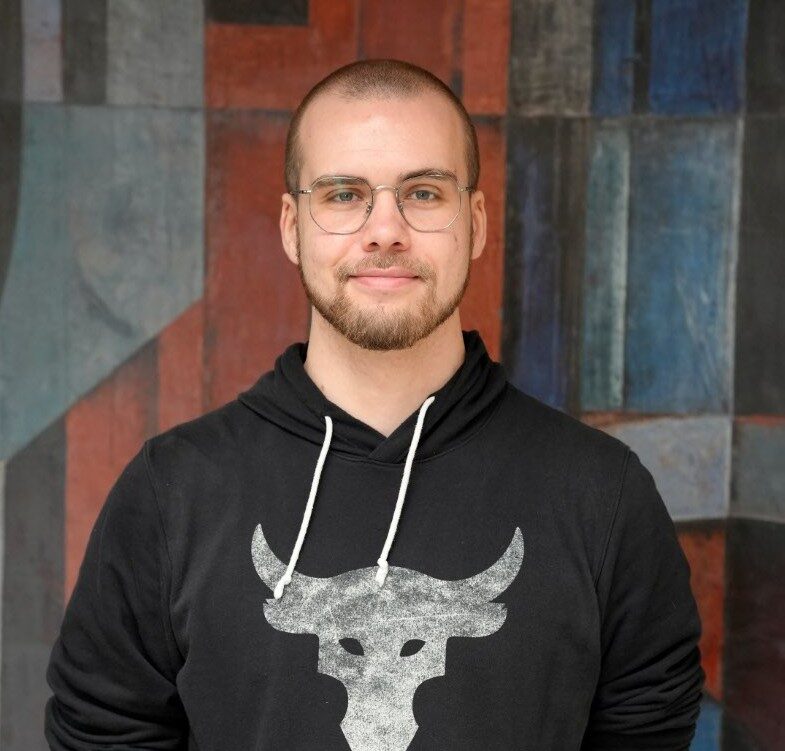
My name is Frederik Löhr, and I’m a student ambassador for the Technical Physics program. Since I’m a student at Coburg University of Applied Sciences and Arts, I can answer your questions directly. So if you’d like to know more about what the program actually entails or what life is like in Coburg, just send me an email at: Frederik.Loehr@stud.hs-coburg.de.