


Bioanalytics
New specializations from WS 2024: Human Biology and Environmental Data Science
At a glance
Profile of the degree program
What we value
Human Biology and Environmental Data Science as specializations
The Bioanalytics degree program provides you with sound biological, analytical and methodological knowledge in the first part of your studies. In the second stage of your studies, you can hone your analytical skills in the field of human biology or environmental data science and thus sharpen your profile. In human biology, you will be able to examine clinical samples such as blood, saliva or tissue for diagnostic purposes and forensic samples for the purpose of identifying the perpetrator and reconstructing the course of the crime. In the Environmental Data Science specialization, you will analyze the impact of anthropogenic substances on ecosystems and model these with the help of modern AI-supported methods. Fully equipped laboratories and PC pool rooms are available for teaching and research work. You will take part in current research, learn in a problem-oriented way and thus be optimally prepared for your career.
Study internationally
At Coburg University of Applied Sciences, students have the opportunity to complete a study or practical semester abroad. To this end, Coburg University of Applied Sciences maintains relationships with foreign partner universities.
Further information is available from the university’s Study Abroad service.
CHE Ranking
The Bioanalytics degree program at Coburg University of Applied Sciences is rated particularly positively by students in the current CHE ranking in the professional practice category.
Course content and schedule
4th semester
Practical semester of 20 weeks, e.g. in industry, research institutes, authorities and hospitals – systematically supervised and reflected upon; also possible abroad
Orientation semester
"Bioanalytics" sounds exciting, but is it (still) too early to really start studying?
Take advantage of our orientation semester!
Your advantages:
-
Individual timetable with modules from one or more degree programs
- Insights into content and working methods
-
Examinations possible – collect first academic achievements
-
Start your regular studies with a head start
In the summer semester 2026, you can take the following courses (modules) from Bioanalytics:
- Analytics 2
- Biochemistry 1
- Biology
- Microbiology 1
- Basics in Data Science
- Mathematical and physical basics 2
You can find more information about the orientation semester here.
Practice during studies
Projects
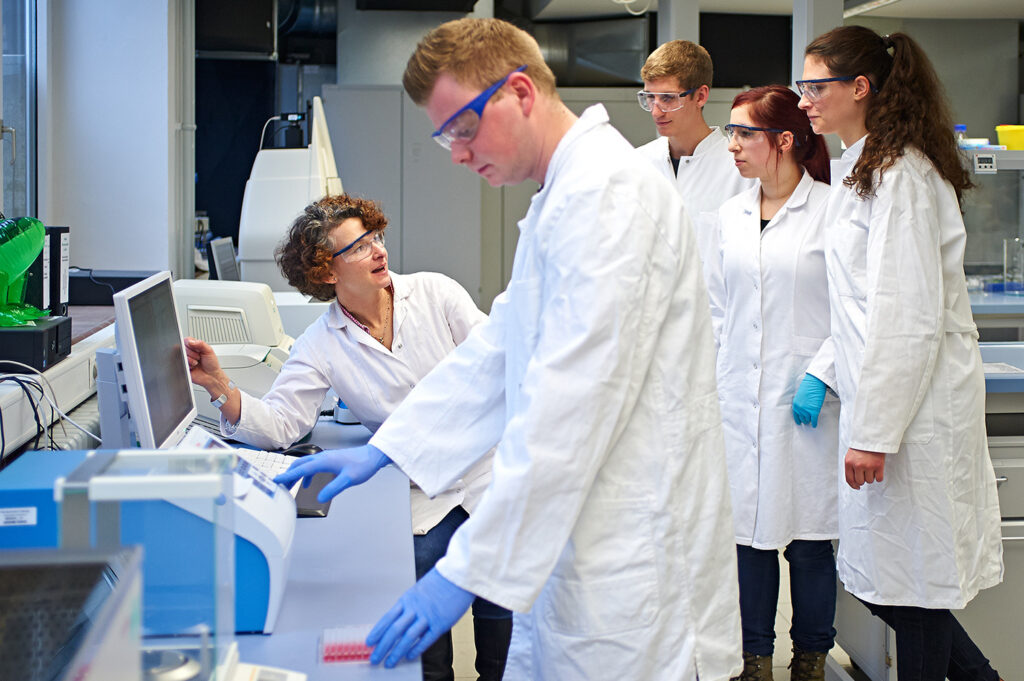
The course is specifically geared towards the requirements of professional practice. Students put their theoretical knowledge into practice right from the start by working in the laboratory and on various projects. Through the projects, they also establish contacts with professional practice at an early stage.
Job & Career
You are currently viewing a placeholder content from YouTube. To access the actual content, click the button below. Please note that doing so will share data with third-party providers.
More InformationInsights
You are currently viewing a placeholder content from YouTube. To access the actual content, click the button below. Please note that doing so will share data with third-party providers.
More Information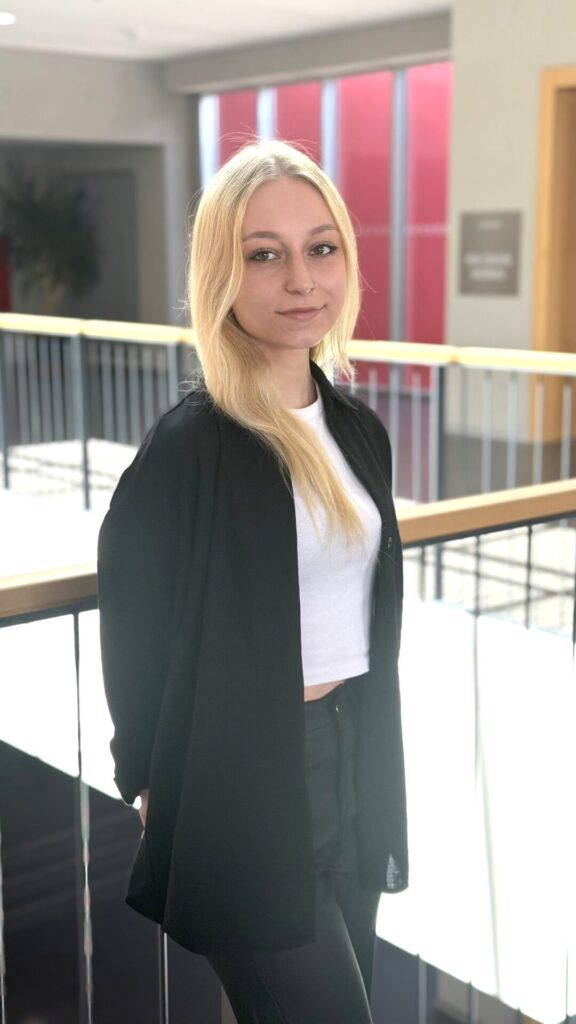
I’m Hannah Schischeg and I’m a student ambassador for the Bioanalytics degree program. As I study at Coburg University of Applied Sciences, I can answer your questions directly. So if you want to know what the degree program is all about or what it’s like to live in Coburg, just send me an email: hannah.schischeg@stud.hs-coburg.de
Student ambassador
The module plan provides an overview of the structure of the degree program.
- Module Plan Bioanalytics Specialization in Human Biology
- Bioanalytics module plan Environmental Data Science specialization
The module handbook provides information on the content of the individual modules.
And the study and examination regulations form the legal basis of the course.
Questions about the content of the degree course can be answered by the course advisor Dr. Klaus Horbaschek.